
Your needs, this model
Does it fit your priorities?
Is the documented 10,000-BTU/h SACC cooling tier enough for your room?
Hisense lists 10,000 BTU/h SACC and estimates up to 550 square feet. The room estimate is not a guarantee; consider room load and heat sources.
Explore this need in the finder →Must this same portable AC provide heat as well as cooling?
No. The exact TW1GD page and sheet list Cool, Dehumidify and Fan; the AP1022HW1GD is a separate heat-pump code.
Explore this need in the finder →Can your window and hose route accept two exhaust ducts?
Yes. The exact sheet lists two 5.9-inch ducts, each 59 inches long; this is not the single-hose AP1022CW1G arrangement.
Explore this need in the finder →Do you require a listed app for connected control?
ConnectLife is named for the exact TW1GD; the product page also lists Google and Alexa compatibility.
Explore this need in the finder →Is a model explicitly listed with inverter technology essential?
Yes; Hisense identifies this exact model as using inverter technology.
Explore this need in the finder →Will the standard panel span your measured slider opening?
The exact sheet lists vertical sliders 25–50 inches wide and horizontal sliders 18–50 inches high; measure orientation as well as span.
Explore this need in the finder →Can you accommodate the listed 69.9-pound net weight with kit?
The exact Release sheet includes kits in its 69.9-pound figure; the family manual recommends two people for moving and installation.
Explore this need in the finder →Do you need a minimum CEER confirmed on the exact EnergyGuide label?
The exact specification sheet prints CEER 7.8, but the EnergyGuide PDF values have not been recovered; an essential label threshold is not confirmed.
Explore this need in the finder →Do you require a built-in lift pump or continuous gravity drain?
Neither route is confirmed. Ordinary cooling is marketed as drain-free, but the manual says to drain the non-heating model before storage.
Explore this need in the finder →Will the listed parts-and-labor warranty term meet your minimum?
The exact Release sheet lists two years for parts and labor; it does not predict a claim outcome or seller service.
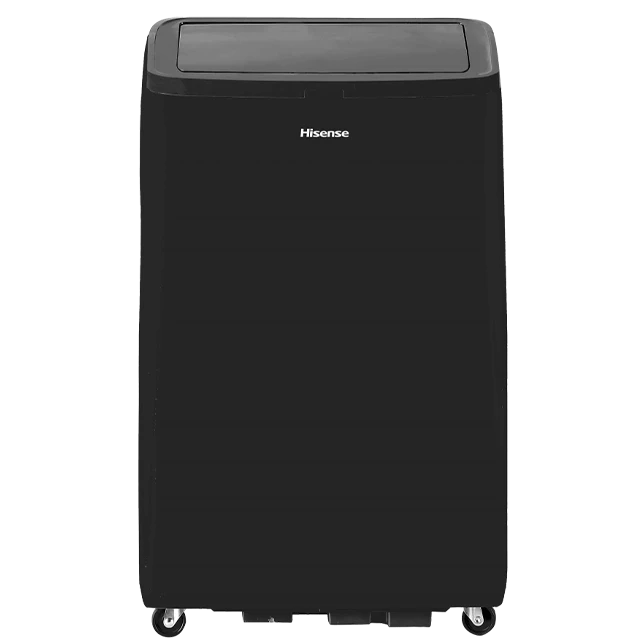
Explore this need in the finder →The Hisense AP1022TW1GD is the cooling-only twin of AP1022HW1GD, not an interchangeable suffix. Hisense lists 10,000 BTU/h SACC, two exhaust ducts, inverter technology and ConnectLife control. Its model-specific materials describe Cool, Dehumidify and Fan modes; if you need heat from the same appliance, inspect the separate HW1GD. They share a family manual, but not identical capabilities or weight.
Start with what 10,000 SACC can—and cannot—tell you
Hisense estimates this model for rooms up to 550 square feet. That is not a promise for every room of that size: ceiling height, sunlight, insulation and connected spaces change the load. The exact cooling rating is 10,000 BTU/h SACC, so a documented 12,000-SACC minimum rules it out. If 10,000 SACC is enough, check whether the ducts, cabinet and controls fit your room.
The Release sheet lists Cooling, Fan and Dehumidifier modes and identifies an inverter. The exact product page promotes ConnectLife, Google and Alexa compatibility; a remote is listed too. These controls may be convenient, but they do not remove the exhaust installation work.
Two ducts make the window plan a real requirement
This is a double-duct configuration, not the one-hose AP1022CW1G. Hisense lists two separate 5.9-inch ducts, each 59 inches long. The standard panel spans 25–50 inches for a vertical slider or 18–50 inches for a horizontal slider. That does not establish fit for every casement or unusually shaped window. Measure the opening and plan a short, unpinched path for both ducts; the shared manual says not to extend them beyond nine feet total.
The cabinet is listed at 17.40 inches wide, 28.27 inches high and 14.69 inches deep. Its 69.9-pound net weight includes the kit, about ten pounds less than the heat-pump HW1GD. The manual recommends two people for moving and installation and asks for at least 20 inches of air space on all sides. Include that clearance, the panel, outlet and duct route in your plan.
Drain-free is not a pump specification
Hisense calls the design drain-free, which describes ordinary moisture handling—not a built-in pump or a guarantee that water never needs attention. The shared manual still says to drain non-heating models before storage and warns a full container can stop operation. No integrated lift pump or continuous gravity-drain path is confirmed for the TW1GD. If you need to send condensate uphill or maintain a permanent hose in a humid room, confirm that route before buying.
The sheet lists 79.2 pints per day of dehumidification at 80°F/50% RH; it is a manufacturer test figure, not a promise of typical room moisture removal. The family manual metadata names both TW1GD and HW1GD, but its cover model line is generic and warns drawings may differ. I use it for common setup and safety, not to transfer the HW1GD's heating or heat-drain requirements to this cooling-only model.
Efficiency, noise and controls need careful reading
Hisense's exact sheet prints CEER 7.8 and a 42–51 dB(A) sound range; it also advertises 42 dB(A) in Quiet mode. These are manufacturer specifications and claims, not a standardized annual electricity-cost forecast or independent measurements. The exact EnergyGuide index lists a download for AP1022TW1GD, but its numeric label values were not obtained for this assessment, so I leave label-based CEER, annual kWh and annual cost unconfirmed. If your essential requirement is an EnergyGuide minimum, this review cannot certify that threshold from the specification sheet alone.
Timer operation is another point to verify rather than assume. The older AP1022TW1GD specification sheet says Timer: YES; a later Release sheet for the same model says Timer: NO. The shared manual describes timer steps, but it is a family document and warns that remote controls may differ. Timer support therefore remains unknown for the exact retail configuration. The Release sheet does list automatic restart and a washable, removable filter. Follow the manual’s cleaning and storage directions rather than treating app control or the drain-free claim as a substitute for routine care.
Power, refrigerant and who should shortlist it
The sheet lists 115 volts, an LCDI 5-15P plug, a 4.9-foot cord and 11/12 A. The manual specifies a grounded three-prong receptacle on a 15-amp time-delay circuit, and warns against adapters and extension cords. The refrigerant is R32; the manual warns of flammability and says sealed-system service belongs to qualified personnel.
Shortlist the TW1GD if 10,000 SACC is suitable for the actual room, a dual-duct slider installation is possible, app/remote control is welcome and cooling-only operation meets your needs. Avoid it when you need heat, one exhaust hose, a confirmed pump or uphill drain, a verified EnergyGuide threshold, or a proven timer. If you want the same family's heat-pump capability and can route its Heat drain hose, compare AP1022HW1GD; if you want cooling with one hose, compare AP1022CW1G. For a higher SACC tier, the separate AP1222CW1W is another cooling-only alternative. Similar branding does not make their window kits, hose setups, heat functions or source gaps interchangeable.
Sources: Hisense’s AP1022TW1GD product page, exact model support page, Release specification sheet, its earlier 0520 sheet, and the shared HW1GD/TW1GD manual. Raw page HTML, EnergyGuide numeric values and exact timer capability remain unresolved.
Key details at a glance
| DOE seasonal-adjusted cooling capacity | 10000 BTU/h |
|---|---|
| Manufacturer's stated room area | 550 sq ft (stated, not a guarantee) |
| Documented modes | cool / dry / fan |
| Dual-hose exhaust arrangement | Yes |
| Variable-speed inverter | Yes |
| App or connected control | Yes |
| Manufacturer's lowest sound claim | 42 dBA (claim, not our measurement) |
| Cabinet width | 17.4 in |
| Cabinet height | 28.27 in |
| Cabinet depth | 14.69 in |
| Listed product weight | 69.9 lb |
| Listed limited warranty | 2 years |
| Window-kit minimum width (where exact manual confirms) | 18 in |
| Window-kit maximum width (where exact manual confirms) | 50 in |
| Supplemental heat documented | No |
Use the exact model’s instructions for operating limits, supplied equipment and version differences.
Sources for this assessment
- Hisense AP1022TW1GD U.S. product-page observation (official indexed text; raw HTML unavailable)
- Hisense AP1022TW1GD exact-model support page observation
- Hisense AP1022TW1GD Release specification sheet
- Hisense AP1022TW1GD earlier specification sheet 0520
- Hisense AP1022HW1GD/AP1022TW1GD shared use and installation manual
- Hisense AP1022TW1GD support-page-linked original product image
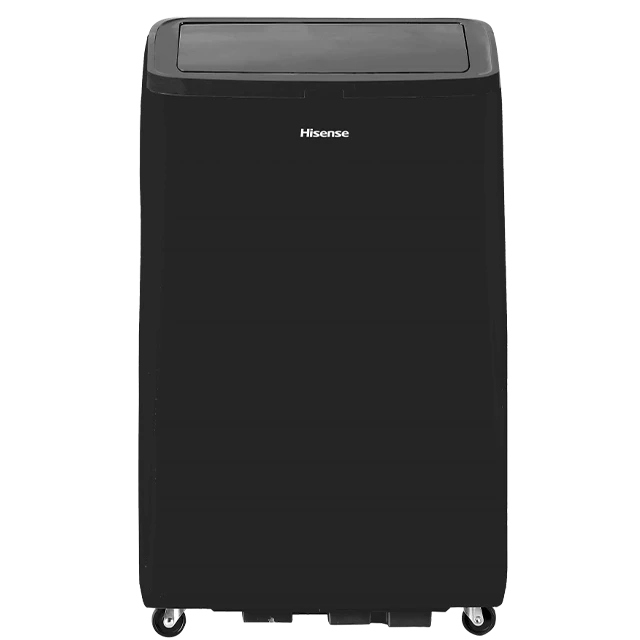
Keep the model number in the decision.
Check the listed suffix, included vent kit, room conditions and service instructions before ordering.