
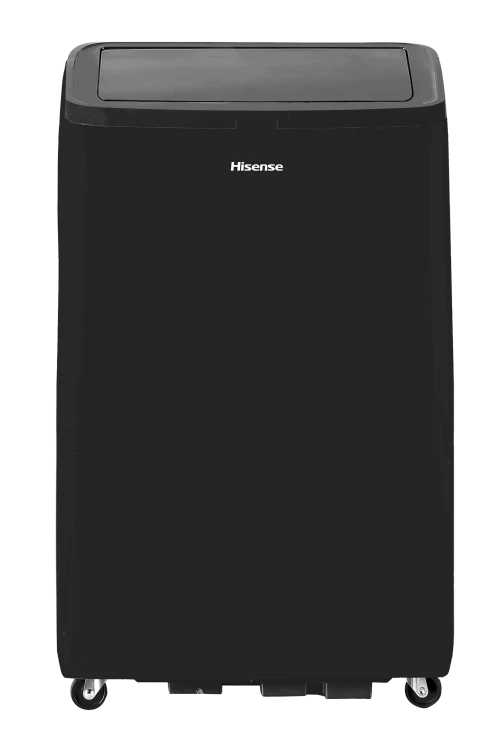
Your needs, this model
Does it fit your priorities?
Is 10,000 BTU/h DOE/SACC enough, or do you require the 12,000-BTU/h tier?
The two exact model sheets list 10,000 BTU/h SACC. Hisense estimates up to 450 square feet, but the home's heat load still matters.
Explore this need in the finder →Is app control useful, and must the same configuration also provide heat?
Hisense lists ConnectLife and voice compatibility for AP1022CW1G, but its exact modes are Cool, Dry and Fan rather than Heat.
Explore this need in the finder →Will one exhaust hose work, or is a dual-hose setup essential?
The exact sheets list one 5.9-inch by 59-inch duct. The single-hose layout is not a confirmed dual-hose substitute.
Explore this need in the finder →Does the uncut standard slider kit cover your measured window opening?
The exact specification sheet and manual show 18–50 inches for common vertical or horizontal sliders; no panel extension is assumed.
Explore this need in the finder →Can you accommodate the listed cabinet height and kit-included weight?
The two exact sheets list 28.27 inches high and 74.9 pounds with the kit. The manual advises two or more people for moving and installation.
Explore this need in the finder →Is an exact EnergyGuide CEER minimum essential?
The specification sheets print CEER 7.8, but the model's EnergyGuide bytes were not recovered. Do not count the sheet figure as the exact label value.
Explore this need in the finder →Does an essential drain setup require a built-in lift pump?
Hisense describes self-evaporation for ordinary use, while the manual calls for draining a full container and before storage. Neither a continuous gravity outlet nor a lift pump is documented.
Explore this need in the finder →Does the listed limited-warranty term meet a two-year requirement?
The exact model sheets list two years for parts and labor. That duration does not describe seller terms or guarantee a claim outcome.
Explore this need in the finder →Does an essential setup require continuous gravity drainage?
No documented continuous gravity-drain path is associated with this exact configuration; normal self-evaporation and manual full-container/storage draining are separate.
Explore this need in the finder →The Hisense AP1022CW1G is a 10,000-BTU/h SACC single-hose portable air conditioner with an advertised room estimate up to 450 square feet. It is the cooling-only 450-SF Wi-Fi model in the AP1022 group: the separately coded AP1022HW1GD is the heat version, while AP1022TW1GD is a different dual-hose configuration. Do not treat those suffixes as cosmetic. Hisense's estimate is a starting point rather than a room-load guarantee; sun exposure, ceiling height, insulation, open doorways and equipment all affect the result.
Cooling-first, not a heater
The exact AP1022CW1G sheets list 10,000 BTU/h DOE/SACC and 450 square feet as the manufacturer's maximum-area estimate. SACC is the useful number for comparing portable units; do not substitute an ASHRAE headline from another method. Its three documented modes are Cool, Dry and Fan. The Hisense page also lists ConnectLife control, Alexa and Google compatibility, a remote, three cooling speeds and a washable filter. If remote adjustment matters, the connected features are useful conveniences. If heat is essential, this is the wrong configuration; check the heat suffix as its own product rather than assuming the CW model can do it.
This model's one exhaust duct is the bigger planning tradeoff. Hot air leaves the room through a single hose, and replacement air can enter through cracks elsewhere. That can work well for a closed room with a suitable window, but it is not equivalent to a dual-hose layout. For a strict two-hose requirement, compare a confirmed dual-hose review; the model name alone is not enough to establish the arrangement. Its listed room size and capacity do not erase the single-hose pressure effect in a leaky space.
Measure the window, hose path and clearance
The exact specification sheet and linked manual show a slider kit for common vertical or horizontal openings from 18 to 50 inches. Measure the clear span before choosing it, and check that the supplied panels can cover it without an improvised extension. The included exhaust duct is 5.9 inches in diameter and 59 inches long. Hisense warns against extending, bending or modifying it; a stretched or sharply kinked hose is not a sensible workaround for a poor location.
The cabinet is 17.40 inches wide, 28.27 inches high and 14.69 inches deep, but the hose and window route still need planning. The manual's printed page 5 shows a 20-inch hose/window-door placement relation, and printed page 6 separately calls for at least 20 inches of air space on all sides for best performance. Leave both in the plan, along with the outlet and hose path. The appliance weighs 74.9 pounds with the kit included, and the manual recommends two or more people for moving and installation. For power, the exact sheet lists 115 V, 60 Hz, a 4.9-foot cord and an LCDI 5-15P plug; the manual specifies a grounded three-prong outlet and says not to use an adapter or extension cord.
Self-evaporating does not mean never drain
Hisense describes this configuration as drain-free during ordinary cooling, with moisture carried out through the exhaust. That is not a promise of a built-in pump or a continuous drain outlet. The linked manual includes a full-container warning and a manual-draining procedure, plus draining before storage. It also tells owners to clean the removable filter and let it dry completely before putting it back. If your essential setup needs a lift pump or continuous gravity drain to a remote location, the available exact-model evidence does not establish that arrangement.
Useful specifications, with a label gap
The exact sheets list R32 refrigerant, 175–230 CFM airflow, 86.4 pints per day of moisture removal at 80°F and 50% relative humidity, and a manufacturer sound range of 50–52 dB(A). Those are published specifications, not our own room or sound measurements. The sheets also list a CEER of 7.8, but the exact EnergyGuide PDF was not recovered for inspection. That label-based CEER, annual energy use and annual-cost figure stay unknown here; the specification-sheet CEER is not used to pass a minimum on the exact label. The product page and specification sheets disagree about timer availability, so timer status is also left unresolved rather than promised.
Who should keep it on the list?
Consider the AP1022CW1G if 10,000-BTU/h SACC is the level you need, app control is useful, heating is optional, and your room has an 18–50-inch slider opening with a short, unmodified single-hose route. It is a less suitable choice if your doorway or stairs make a 74.9-pound package impractical, the cabinet must sit in a tight alcove, you need dual-hose operation, or a pump, timer or EnergyGuide threshold is essential. The reviewed Hisense AP1222CW1W is a higher 12,000-BTU/h SACC single-hose option when the extra capacity matters; it does not change the need to plan the hose and window fit. For compact rooms, compare the smaller reviewed AP0525CR1W and AP0625CR1W rather than paying for a capacity tier you may not need. In every case, treat room-area estimates as prompts to check the actual heat load, not guarantees.
Sources: Hisense's AP1022CW1G product page, support page, 0520 specification sheet, Release specification sheet and model-named use and installation manual. The sheet revisions disagree on the timer; the exact EnergyGuide figure is not asserted.
Key details at a glance
| DOE seasonal-adjusted cooling capacity | 10000 BTU/h |
|---|---|
| Manufacturer's stated room area | 450 sq ft (stated, not a guarantee) |
| Documented modes | cool / dry / fan |
| Dual-hose exhaust arrangement | No |
| App or connected control | Yes |
| Cabinet width | 17.4 in |
| Cabinet height | 28.27 in |
| Cabinet depth | 14.69 in |
| Listed product weight | 74.9 lb |
| Listed limited warranty | 2 years |
| Window-kit minimum width (where exact manual confirms) | 18 in |
| Window-kit maximum width (where exact manual confirms) | 50 in |
| Supplemental heat documented | No |
Use the exact model’s instructions for operating limits, supplied equipment and version differences.
Sources for this assessment
- Hisense AP1022CW1G U.S. product page observation (rendered/indexed text, not raw HTML)
- Hisense AP1022CW1G U.S. product support page observation (not raw HTML)
- Hisense AP1022CW1G model-named 0520 specification sheet
- Hisense AP1022CW1G model-named Release specification sheet
- Hisense AP1022CW1G model-named use and installation manual
- Hisense U.S. compliance Energy Guide index observation
Keep the model number in the decision.
Check the listed suffix, included vent kit, room conditions and service instructions before ordering.