
Your needs, this model
Does it fit your priorities?
Is the 12,000-BTU/h SACC tier essential for this room?
The exact release sheet lists 12,000 BTU/h SACC and the maker gives a maximum area estimate of 550 sq ft; room conditions still determine whether that is enough.
Explore this need in the finder →Will the included standard slider panel cover the measured opening without cutting or extending it?
The exact sheet and manual show an 18-to-50-inch standard panel span. An opening beyond 50 inches is not covered by the documented unmodified kit.
Explore this need in the finder →Is connected app control essential?
Yes: the exact product page names ConnectLife and lists Alexa/Google compatibility. A CEER 8.4 value printed on the specification sheet is not substituted for a missing exact EnergyGuide value.
Explore this need in the finder →Must the same configuration provide heat?
No. The exact product page and both sheets list Cool, Fan and Dehumidify, not Heat.
Explore this need in the finder →Does the standard installation meet a single-hose requirement?
Yes. The exact specification sheet says Single Duct and the model-named installation manual diagrams one exhaust hose.
Explore this need in the finder →Can self-evaporation satisfy an essential continuous gravity or pump-drain need?
No such route is documented. Hisense advertises self-evaporation, but the non-heating-model manual gives manual-draining instructions for a full container and storage.
Explore this need in the finder →Can you fit the listed cabinet and carry its kit-included weight?
The exact sheet lists a 33.15-inch cabinet height and 83.8 pounds with kits included; the manual also warns that two or more people should move/install it.
Explore this need in the finder →Does the listed limited-warranty term meet two years?
The exact release sheet lists two years for parts and labor. This does not describe seller terms or guarantee any particular claim outcome.
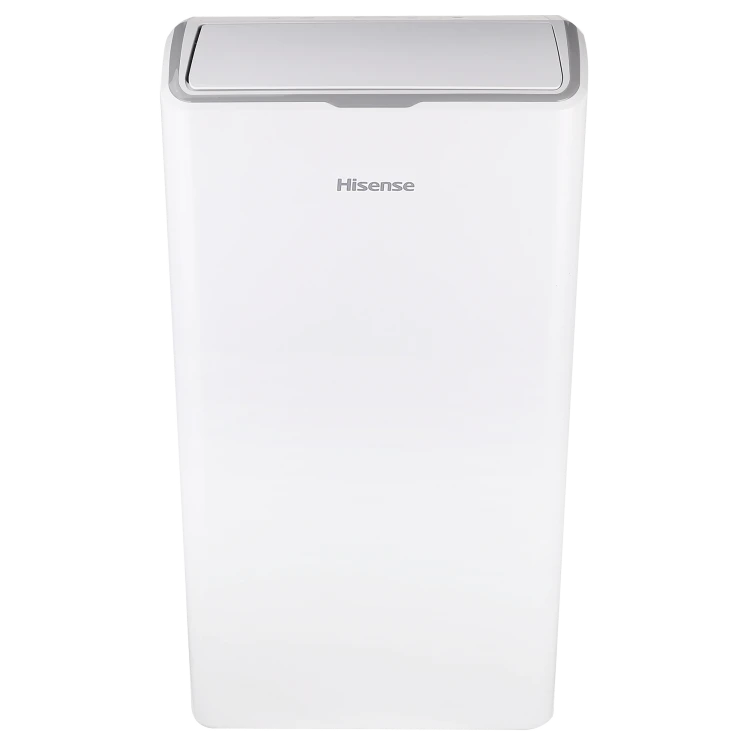
Explore this need in the finder →The Hisense AP1222CW1W is the large-room choice in this reviewed Hisense group: its exact U.S. specification sheet lists 12,000 BTU/h SACC and Hisense estimates coverage up to 550 square feet. That pairing is useful when you need a portable unit in a bigger room, but the area claim is a starting estimate, not a performance guarantee. Sun exposure, ceiling height, open doorways, insulation and heat-producing equipment all change the load. Use the DOE/SACC rating when comparing portable units, and do not swap in an ASHRAE headline from a different test method.
A higher capacity tier, with a real single-hose compromise
Unlike a 5,000- or 6,000-BTU compact unit such as the AP0525CR1W or AP0625CR1W, the AP1222CW1W is rated at 12,000 BTU/h SACC. The same sheet and its exact-model installation guide describe a single exhaust duct, not two separate intake and exhaust hoses. That distinction can matter in a large room: a single-hose portable AC sends room air out with the hot exhaust, so replacement air can leak in around doors or windows. A more powerful rating does not remove that airflow tradeoff. If your space is leaky or the dual-hose arrangement itself is essential, compare a confirmed dual-hose model rather than treating this Hisense as equivalent.
The unit is for cooling, fan circulation and dehumidifying. Hisense lists ConnectLife app control plus an included remote, and its product copy names Alexa and Google compatibility. Those conveniences can make it easier to change settings without walking back to the cabinet, but they do not add a heating mode. The current specification sheet gives three cooling speeds and an oscillating outlet, while its timer line says “NO.” An earlier sheet and the shared-use manual show timer controls, so timer availability for this exact configuration is left unresolved; do not buy it for a must-have timer without checking the exact delivered unit.
Measure the window and floor space first
The standard kit covers vertical sliders 18 to 50 inches wide and horizontal sliders 18 to 50 inches high. Measure the usable opening, then leave room for the cabinet and its hose. The listed body is 18.11 inches wide, 33.15 inches high and 16.34 inches deep; the manual calls for at least 20 inches of clear space on all sides. Its one 6.3-inch exhaust hose is listed at 59 inches long. The manual warns against extending, bending or otherwise modifying that hose, and the product instructions say the included duct/window kit is needed for effective cooling. A narrow window, deep alcove or short hose route should be evaluated before delivery, not improvised afterward.
This is not a light unit to carry up stairs. Hisense lists 83.8 pounds with the kits included, and the instructions warn of excessive lifting weight and recommend two or more people for moving and installation. The sheet lists a 115-volt, 60-hertz supply at 11.5/12 amps and a 4.9-foot power cord with an LCDI 5-15P plug. The manual calls for a grounded three-prong outlet, prohibits adapters and extension cords, and specifies 15-amp time-delay protection. Keep the outlet accessible and do not count on an extension cord to bridge a placement problem.
Drain-free language still has a maintenance footnote
Hisense markets a drain-free, self-evaporating design, and the normal cooling setup sends moisture out with the exhaust. That does not establish a lift pump or promise that no water will ever need attention. The non-heating-model manual includes a manual-drain procedure when the container is full and before storage. If you require a continuous hose to a drain, sump or remote bucket, this review does not confirm that arrangement for the AP1222CW1W. The removable PP filter is washable; inspect and clean it as the manual directs, and let it dry fully before reinstalling.
What the numbers do—and do not—settle
The exact sheet lists a 51–55 dB(A) sound range, 100.8 pints per day of dehumidification at 80°F and 50% relative humidity, R32 refrigerant, and a two-year parts-and-labor warranty. Those are manufacturer specifications, not our sound or cooling measurements. The same sheet prints CEER 8.4, but an exact EnergyGuide label with annual use and cost was not located in the current support materials. A spec-sheet CEER is not substituted for the requested label value here, so this model cannot clear an EnergyGuide-based efficiency minimum on the available evidence. The published area estimate also should not be treated as a room-load calculation.
Who should keep it on the shortlist?
Consider this model when the 12,000-BTU/h SACC tier and ConnectLife control matter, the room estimate is relevant to your conditions, you can use one hose through a compatible 18–50-inch opening, and the 83.8-pound cabinet can be delivered and placed safely. It is a poor fit if you need heat, a dual-hose plan, confirmed timer operation, a continuous pump drain, a label-verified CEER threshold or a lower weight ceiling. For a smaller closed room, compare the AP0525CR1W and AP0625CR1W rather than assuming the largest figure is automatically the better choice. For a demanding or leaky room where single-hose pressure loss is unacceptable, look at an exact dual-hose configuration instead.
Sources: Hisense’s AP1222CW1W product page, exact-model support page, the AP1222CW1W release specification sheet and the AP1222CW1W-named use and installation manual. An older exact-model sheet prints a different timer value; that conflict is preserved rather than silently selecting a convenient version.
Key details at a glance
| DOE seasonal-adjusted cooling capacity | 12000 BTU/h |
|---|---|
| Manufacturer's stated room area | 550 sq ft (stated, not a guarantee) |
| Documented modes | cool / dry / fan |
| Dual-hose exhaust arrangement | No |
| App or connected control | Yes |
| Manufacturer's lowest sound claim | 51 dBA (claim, not our measurement) |
| Cabinet width | 18.11 in |
| Cabinet height | 33.15 in |
| Cabinet depth | 16.34 in |
| Listed product weight | 83.8 lb |
| Listed limited warranty | 2 years |
| Window-kit minimum width (where exact manual confirms) | 18 in |
| Window-kit maximum width (where exact manual confirms) | 50 in |
| Built-in condensate pump | No |
| Supplemental heat documented | No |
Use the exact model’s instructions for operating limits, supplied equipment and version differences.
Sources for this assessment
- Hisense AP1222CW1W exact U.S. product page observation (not raw HTML)
- Hisense AP1222CW1W exact support page observation (not raw HTML)
- Hisense AP1222CW1W-named use and installation instructions
- Hisense AP1222CW1W specification sheet 0520 revision
- Hisense AP1222CW1W release specification sheet
- Exact product-page-linked Hisense AP1222CW1W image
Keep the model number in the decision.
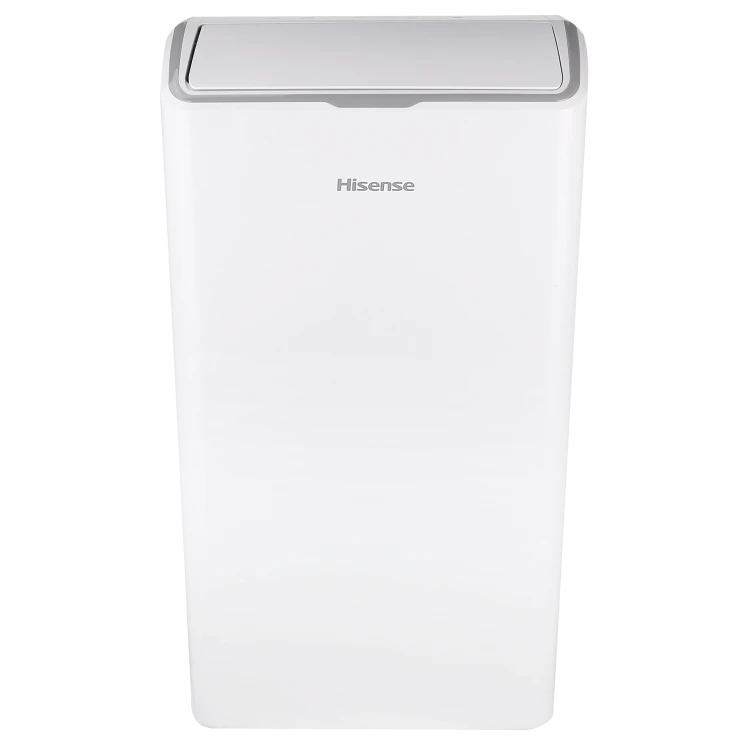
Check the listed suffix, included vent kit, room conditions and service instructions before ordering.