
Your needs, this model
Does it fit your priorities?
Will this exact 10,300-SACC model meet a 10,000-BTU cooling minimum in a single-hose setup?
Yes, the ARC-148MS product page and exact manual both identify 10,300 BTU/h SACC, and the page specification lists one exhaust hose.
Explore this need in the finder →Does the ARC-148MS satisfy a dual-hose installation requirement?
No. Despite dual-hose words in the product URL, the exact model specification and manual describe a single exhaust hose.
Explore this need in the finder →Will the included window kit reach a 49-inch clear opening?
No. The exact manual lists a maximum 48-inch window-kit span; a 49-inch opening needs a separately verified extension or another model.
Explore this need in the finder →A clear 10,300-BTU SACC rating, with one important hose correction
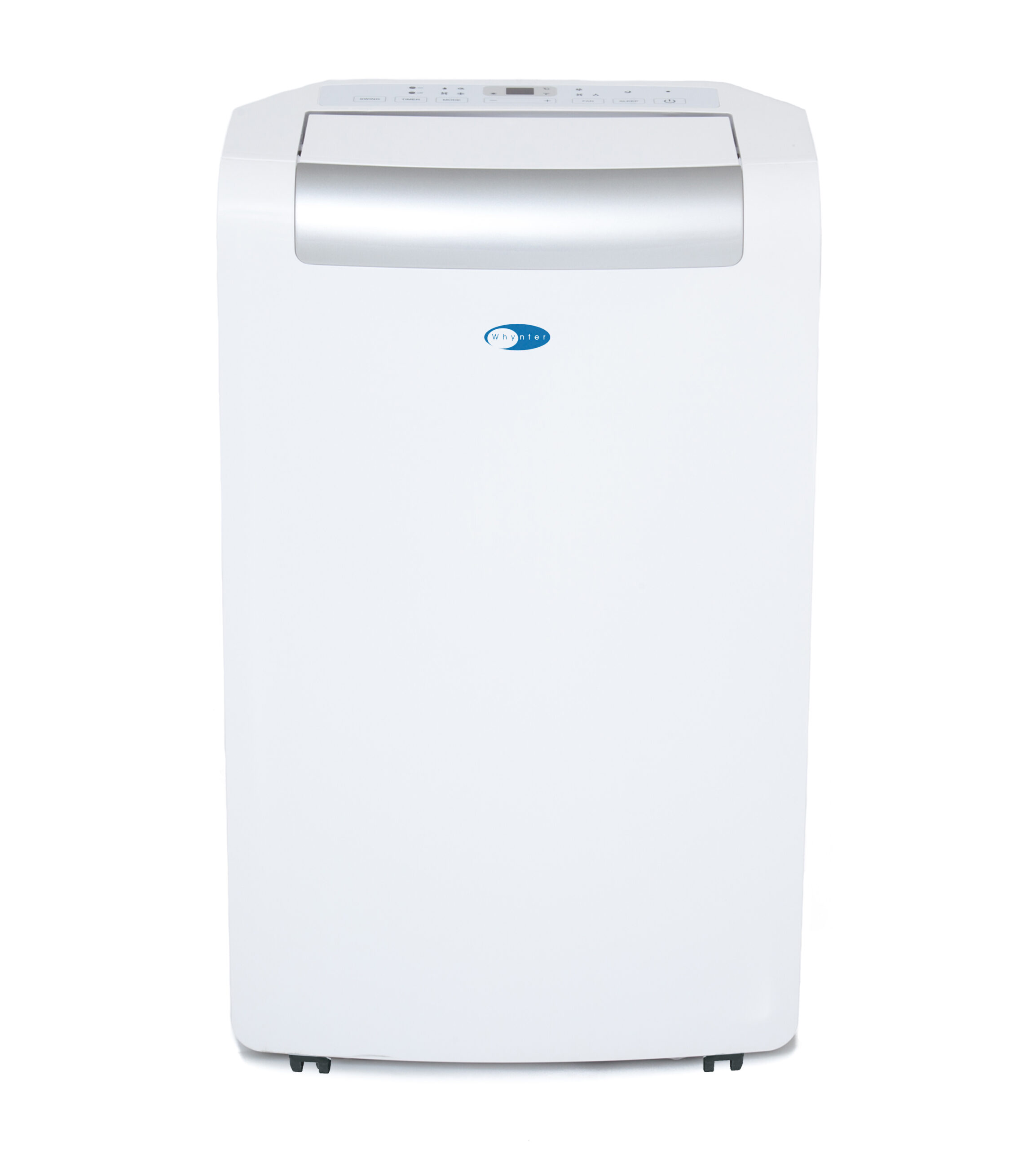
Whynter’s ARC-148MS is a white portable air conditioner with 14,000 BTU/h ASHRAE cooling and 10,300 BTU/h SACC. The exact product specification and the technical table in its model-named manual agree on the SACC value, which is the more useful figure to compare with other portable ACs. Whynter suggests it for rooms up to 500 square feet; that is a broad sizing estimate rather than a promise for a sunny, open or unusually tall room. Heat from appliances, ceiling height, insulation and how much of the home remains open all affect the load.
There is a misleading label elsewhere: the product URL contains “dual-hose,” but the exact ARC-148MS specification identifies a single-hose system and its manual supplies one 6-inch exhaust hose. The installation instructions show the one-hose window setup. It is therefore not a dual-hose appliance. That matters if you want separate outside-air intake and exhaust paths; a dual-hose model is a different configuration.
Measure the opening and floor space together
The exact manual lists a window slider from 26.75 to 48 inches. An opening shorter than the minimum or wider than the top end will not be covered by the listed kit without a separately planned panel solution. Whynter says the kit can be cut for a narrower opening, but never cut through the exhaust-hose cutout. Do not assume an extension will be in the carton. The exhaust hose is listed at 59 inches; the manual advises keeping the path as short and straight as practical rather than stretching it or blocking the air intake.
The cabinet is 18.4 inches wide, 15.63 deep and 30.12 high, with a listed weight of 73 pounds. Casters help roll it across a suitable level surface, but stairs, thresholds and narrow turns still need a carrying plan. The manual recommends at least 20 inches from nearby walls for airflow and a hard, level floor. Measure the complete position including the hose connection, window panel, outlet and clearance, not just the cabinet width.
Cooling, dry mode and water handling
The ARC-148MS has automatic, cooling, fan and dehumidifying operation; Whynter explicitly lists Heat Mode: No. Its 71-pint-per-day dehumidification capacity is a manufacturer rating, not a guarantee for every humidity level. The manual describes a self-evaporating system that usually exhausts moisture with the hot air, but says that in high humidity a small amount can remain in the reservoir. It provides a lower port for manual emptying and an upper port for continuous gravity drainage. That gives you a way to manage water when needed, although a hose still needs a downhill route to a suitable drain.
The page has a generic feature bullet mentioning an automatic pump during heating even though its exact-model specification says no heat. The model-specific manual describes manual and continuous drainage but no pump operation. I would not choose ARC-148MS on the promise of a built-in condensate pump; if pump-assisted drainage is essential, compare a model whose exact manual documents the pump and the way it is used.
Filter care and control routine
The listed filter set contains a washable pre-filter and activated-carbon filter. The manual says the pre-filter catches larger particles such as dust and pet hair, while the carbon layer is intended for smoke and odors; it advises replacing the carbon element every two to three months or as needed. Whynter’s product-page FAQ recommends rinsing washable filters every two weeks, then letting them dry before reuse. It also warns never to operate the appliance without its filter. If you use dry mode with the hose removed, the room may feel warmer because the unit is no longer sending exhaust heat outside, and the manual warns that more frequent draining may be needed without the hose. There is no built-in humidistat for selecting a target humidity percentage.
Cooling requires the exhaust hose to vent outdoors. The control offers three fan speeds, a timer, louver swing and a remote. Whynter’s low-speed sound claim is below 53 dBA; the manual lists 53, 54.5 and 57.5 dBA for the speeds. Those are manufacturer figures, not a measured noise test in a bedroom. The manual also calls for a grounded wall outlet and says not to use an extension cord.
Energy and warranty context
The exact manual lists CEER 7.92, but the model’s EnergyGuide is a yellow-label annual energy estimate rather than a CEER chart. It prints 4,614 kWh of estimated yearly electricity use and $554 estimated annual cost based on its 12-cent-per-kWh rate. That is a label estimate, not a household bill or a promise of savings. Climate, hours, set temperature, local rates and building heat gain affect real use. Whynter lists a one-year limited warranty and an additional two years on the compressor; the longer compressor term is not full-unit coverage.
Who this version suits
ARC-148MS makes sense when a documented 10,300-BTU SACC, single-hose installation and cooling-only use line up with your room. Choose another model if heat, dual hoses or a confirmed integrated pump is essential. The ARC-148MHP adds a heat pump and a documented pump hose, but its exact SACC figures conflict; it should not replace this model when a 10,000-BTU minimum must be established. Measure the actual window and check the complete ARC-148MS suffix when buying. The exact product page, model manual and EnergyGuide identify the documents used here.
This review interprets manufacturer documentation, not a hands-on trial. It does not claim measured cooling, noise, power draw, durability or owner experience; nor does it report a current price or stock level.
Key details at a glance
| DOE seasonal-adjusted cooling capacity | 10300 BTU/h |
|---|---|
| Manufacturer's stated room area | 500 sq ft (stated, not a guarantee) |
| Documented modes | auto / cool / dehumidify / fan |
| Dual-hose exhaust arrangement | No |
| Manufacturer's lowest sound claim | 53 dBA (claim, not our measurement) |
| Cabinet width | 18.4 in |
| Cabinet height | 30.12 in |
| Cabinet depth | 15.63 in |
| Listed product weight | 73 lb |
| Listed limited warranty | 1 years |
| Window-kit minimum width (where exact manual confirms) | 26.75 in |
| Window-kit maximum width (where exact manual confirms) | 48 in |
| Supplemental heat documented | No |
Use the exact model’s instructions for operating limits, supplied equipment and version differences.
Sources for this assessment
Keep the model number in the decision.
Check the listed suffix, included vent kit, room conditions and service instructions before ordering.