
Your needs, this model
Does it fit your priorities?
Can this exact configuration provide heat when heating is essential?
No. Whynter lists Heat Mode: No; ARC-122DHP is the separate heat-capable suffix.
Explore this need in the finder →Will it satisfy a strict 7,100-BTU/h DOE/SACC minimum?
A built-in pump is not documented. The manual describes upper/lower drain ports and optional gravity drainage; the exact DHP suffix adds a pump.
Explore this need in the finder →Does its short cabinet fit below a 30-inch height limit?
Yes. Whynter lists the cabinet at 29.5 inches tall; allow additional airflow and hose clearance.
Explore this need in the finder →A cooling-only 7,000-BTU SACC dual-hose unit
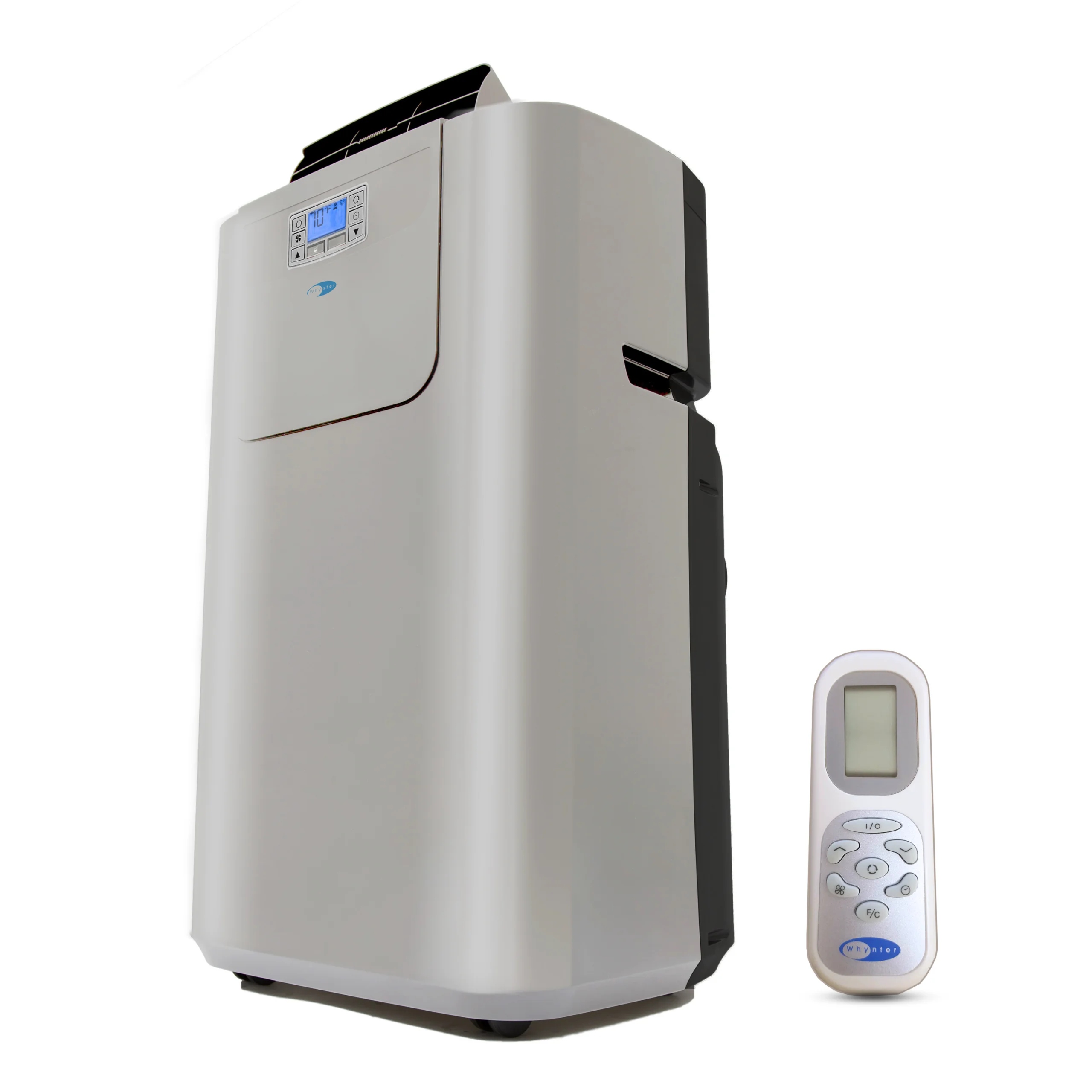
The Whynter ARC-122DS is a silver Elite-series portable air conditioner with a 12,000-BTU ASHRAE headline and a more useful 7,000-BTU seasonal-adjusted cooling capacity (SACC). The exact Whynter page lists cooling, dehumidify and fan modes, a dual-hose layout, three fan speeds and an area estimate of 400 square feet. That room figure is a broad manufacturer guide, not a guarantee. A sunny top-floor room, tall ceiling, open doorway or heat-producing equipment can make a nominal 400-square-foot estimate a poor fit.
This configuration does not heat. If heat in the same appliance is essential, the closely named ARC-122DHP is a different model: its added heat-pump mode changes both the use case and the drain plan. Do not treat the last letters as a cosmetic detail or transfer the DHP's pump, heat or heating capacity to this cooling-only DS.
What the dual hoses change—and what they do not
The ARC-122DS draws outside air through an intake hose and sends hot air out through a second, larger hose. That is a different installation from the common single-hose arrangement, which exhausts room air and can draw replacement air through gaps in a building. Whynter describes dual-hose units as reducing that pressure effect; it is not an independent cooling test or a promise of a particular room temperature. The manual also explains that the intake hose can be removed in conditions where outdoor air is much hotter or more humid, converting the setup to single-hose operation. That option is useful to understand, but it is not a reason to ignore the supplied instructions or the outside-air conditions.
The cabinet itself measures 17 inches wide, 16 deep and 29.5 high, before allowing for the hose connections, airflow clearance and the window panel. The manual calls for at least 20 inches of clearance around the machine and warns against crushed or sharply bent exhaust hose. A narrow body does not mean the complete setup is compact: the two ducts need a clear route, the window kit occupies part of the opening, and the unit should sit on a level hard surface. Measure the cabinet and hose path, not only the space beside a sofa.
Check the included window kit against the actual opening
There is a meaningful documentation conflict that makes a hard window-fit promise inappropriate. The linked manual specifies a window-slider length from 20 to 46 inches. Whynter's current product page lists the maximum as 56 inches, while its accessories listing identifies an optional replacement kit with a 46-inch maximum. Those may describe different kit versions, but the available documents do not establish which slider is in every current box. The finder therefore does not treat either endpoint as confirmed for this model. Before buying, ask the seller which kit is included and check the exact parts against your clear track opening; do not rely on the wider figure without confirmation.
The page lists a 68-pound net weight, while the manual says 61 pounds. Those are both official specifications, but they disagree. I have not used either value as a maximum-weight match. For a raised installation or frequent stair carrying, this is a substantial appliance even at the lower figure; plan how it will reach the room and be moved upright. The product page lists a one-year warranty plus three years on the compressor, so read the current warranty terms rather than interpreting the longer compressor period as full-unit coverage.
Condensate and routine care
Whynter says its self-evaporative system exhausts condensate automatically in most environments. That is not the same as a documented built-in lift pump. The ARC-122DS has upper and lower drain ports; its manual describes draining or using an optional upper gravity hose for continuous removal. A long, humid cooling session can still call for attention to the drain warning, and the manual directs owners to empty the internal water and clean the filters before seasonal storage. Do not assume that a hose or pump shown with another Whynter model is supplied with this one.
The washable pre-filter should be cleaned at least every two weeks and fully dried before it goes back. There is also an activated-carbon filter. Keep the air intakes clear, turn the unit off before cleaning, and leave the required clearance. The instructions specify a grounded receptacle, warn against extension cords and recommend a separate 15-amp circuit. These are practical installation limits, not optional performance tweaks.
Sound and energy figures need context
The current page claims less than 47 dBA on low and less than 52 dBA on high; its linked manual lists less than 52 dBA. These are manufacturer sound claims, not measurements from a quiet-room test. The manual gives a CEER/EER pair of 6.88/9.15, while the exact EnergyGuide shows estimated annual use of 3,030 kWh and an estimated annual cost of $364 using its printed rate assumption. The label's cost is not the amount a particular household will pay; climate, electricity rates, operating hours, thermostat settings and room load all change real use. I have not used the manual's ratio as a substitute for an exact EnergyGuide CEER filter.
Choose ARC-122DS if 7,000-BTU SACC cooling, a dual-hose layout and a cabinet under 30 inches high fit your room and window setup, and you do not need heating or pump-assisted drainage. If heat and a pumpable drain are essential, compare ARC-122DHP and plan for a drain tube during heat-pump use. If you want a simpler gravity-drain arrangement and no heat, the DS avoids those extra capabilities—but still requires an exhaust route, filter care and occasional water handling. Consult the official ARC-122DS page, linked user manual and EnergyGuide for the documents behind this assessment.
This is a document-based review, not a hands-on cooling, sound, power-draw or durability test. No price, stock status, owner experience or guaranteed room result is claimed. Verify the full ARC-122DS code and the actual window-kit parts before ordering.
Key details at a glance
| DOE seasonal-adjusted cooling capacity | 7000 BTU/h |
|---|---|
| Manufacturer's stated room area | 400 sq ft (stated, not a guarantee) |
| Documented modes | cool / dehumidify / fan |
| Dual-hose exhaust arrangement | Yes |
| Manufacturer's lowest sound claim | 47 dBA (claim, not our measurement) |
| Cabinet width | 17 in |
| Cabinet height | 29.5 in |
| Cabinet depth | 16 in |
| Listed limited warranty | 1 years |
| Supplemental heat documented | No |
Use the exact model’s instructions for operating limits, supplied equipment and version differences.
Sources for this assessment
Keep the model number in the decision.
Check the listed suffix, included vent kit, room conditions and service instructions before ordering.