
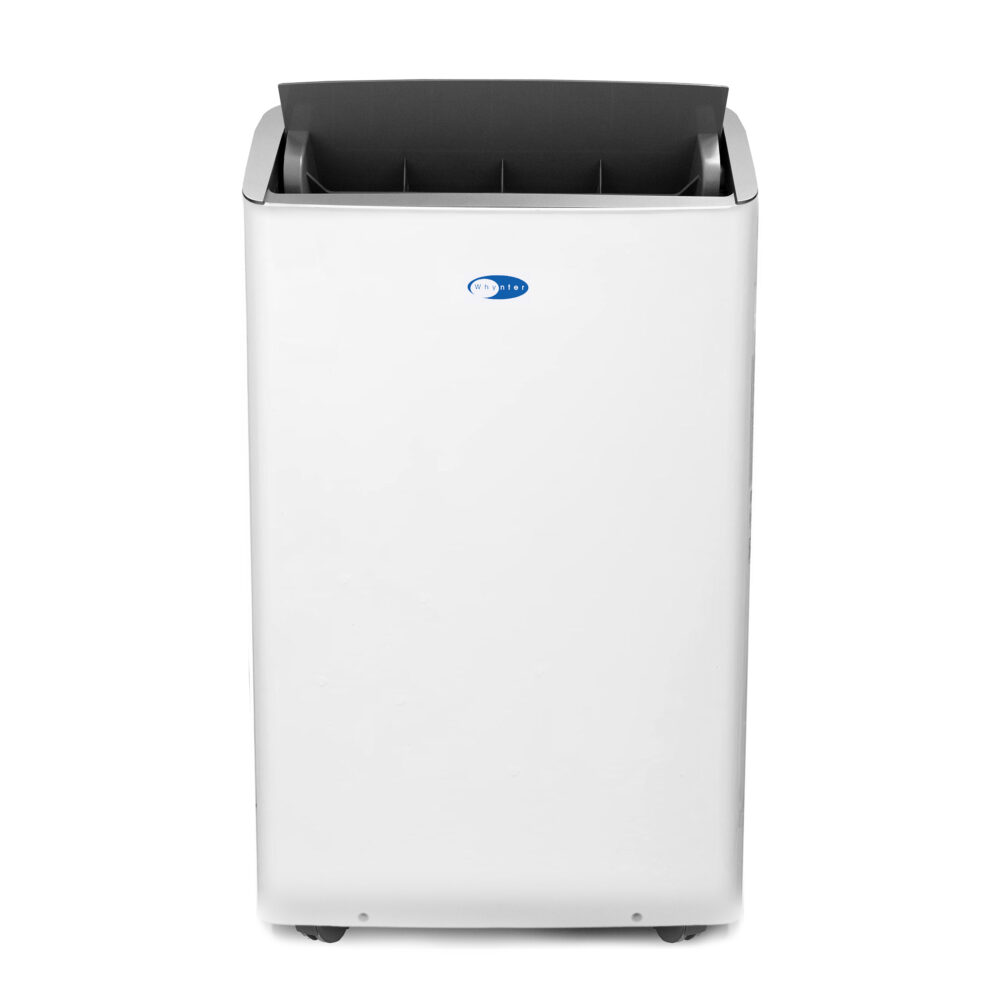
Your needs, this model
Does it fit your priorities?
Does the documented 10,000-BTU/h SACC clear a 10,000-BTU/h cooling minimum?
Yes, but the exact 10,000-BTU/h rating does not clear a 12,000-BTU/h SACC minimum.
Explore this need in the finder →Will this model meet an essential dual-hose requirement?
Yes. Whynter calls the arrangement dual hose-in-hose; a single-hose requirement excludes it.
Explore this need in the finder →Can this cooling-only model satisfy a requirement for heating?
No. The exact ARC-1030WN page and shared manual list no heat mode.
Explore this need in the finder →Does an exact-label CEER requirement of 12.5 pass?
No. The linked ARC-1030WN EnergyGuide prints 12.3; the current page/manual print 14.7, a retained conflict.
Explore this need in the finder →Can a numeric window-opening span be guaranteed against the exact current panel maximum?
No. The current page and compatible kit list 28–82 inches, but an older exact-model manufacturer listing gives a shorter maximum in one row and the manual does not tabulate it.
Explore this need in the finder →Read 10,000 BTU/h SACC as the cooling rating
The Whynter ARC-1030WN is the 10,000-BTU/h SACC member of the NEX inverter family. Whynter also lists 12,000 BTU/h under the older ASHRAE method, but that larger headline is not a substitute for SACC when comparing portable units. The company estimates this model for rooms up to 500 square feet; that is a sizing starting point, not a guarantee for a sunny, poorly insulated, high-ceilinged or heat-producing room. The exact shared 2026 manual puts the smaller ARC-1030WN beside the 12,000-BTU/h SACC ARC-1230WN and ARC-1230WNH, making the capacity step clear.
Its key layout is dual hose-in-hose: one path brings in outside air and another exhausts hot air. The distinction matters in a room where pressure balance is important, but it does not remove the need for an actual outdoor vent. The unit still needs an opening for its supplied window panel, a short uncrushed hose path and enough free area around the inlets and outlet. The manual recommends 20 inches of unobstructed space around the hose ends and warns against extending or sharply bending the assembly. It lists a hose length up to 47 inches; that short reach makes window placement part of the room plan rather than an afterthought.
The capacity tier changes; the cabinet does not
The ARC-1030WN has four modes—Auto, Cool, Dehumidify and Fan—and no heat mode. It is an inverter model with smart Wi-Fi control through the NetHome Plus app and listed Alexa/Google Assistant voice compatibility. These capabilities make it meaningfully different from a basic single-hose portable AC, but do not prove independent energy savings, faster cooling or quieter operation in a particular room. Whynter’s performance statements are manufacturer claims, not tests for this review.
One useful surprise is that the 10,000-SACC ARC-1030WN and the higher-capacity 12,000-SACC 1230 siblings share essentially the same listed cabinet envelope: about 19.5 inches wide, 16.7–16.75 inches deep and 32.5 inches tall. Do not pick this model expecting a smaller floor footprint than the ARC-1230WN. Its published figures are 82 pints per day of dehumidification, 1266 watts / 11.8 amps at maximum cooling power and 115 volts. The manual lists 72.8 pounds while the current product page says 73 pounds; those are close rounded listings rather than a reliable lifting measurement. Use the specified weight only as a planning figure and arrange help for stairs.
The exact product page gives a 28-to-82-inch window-kit range and identifies the supplied three-piece slider. An older Whynter product listing gives a shorter maximum in one specification row while its accessory description gives 28–82 inches. The current page, compatible-kit listing and the manual's cut-to-fit instructions point toward the wider span, but the manual does not tabulate the maximum. If your measured opening is close to either limit, confirm the actual panel in the box before relying on a hard fit. A casement window or a location far from the opening will need a separate, suitable vent solution.
There is a real label-versus-page efficiency conflict
The exact-model EnergyGuide is unusually important here. It identifies ARC-1030WN, 10,000 BTU and CEER 12.3; the current product page and the shared manual table instead print CEER 14.7. Those cannot both be the same label value. For comparisons that rely on the EnergyGuide, this review uses the exact product-linked yellow label's 12.3 rather than the higher page/manual number. Its yearly-cost panel is also awkward: it shows $62 but says this model's yearly cost was unavailable when the range was published, so no household bill estimate is inferred. If a label CEER minimum is essential, compare the label on the retail unit and ask Whynter to reconcile it with the current-page specification before purchase.
The manual calls for regular pre-filter cleaning—about every two weeks during use—and keeping both hoses and the filter area clear. Whynter describes self-evaporation in most conditions, but high humidity can still fill the internal tray; the manual covers both manual draining and gravity drainage, including a supplied gravity hose. A full reservoir stops cooling or dehumidifying. This is not a no-maintenance appliance just because the exhaust often carries away water. For seasonal storage, drain collected water, dry the interior with fan mode as directed, clean the filters and store the cabinet upright.
Who this exact configuration fits
Shortlist the ARC-1030WN when 10,000 BTU/h SACC is enough for your room, dual-hose venting and connected control are useful, and you want the documented cooling/dehumidify/fan plan without a heater. Choose the ARC-1230WN instead if you need its higher 12,000-BTU/h SACC figure, not because the cabinets are markedly different. The ARC-1230WNH has that same cooling tier plus heat-pump operation, but heating requires a drain hose and introduces a temperature boundary. The ARC-1030WN is not a solution when heating is essential, when an exact label CEER above 12.3 is required, or when an unverified window maximum or net weight is a deal-breaker.
This is a documentation-based assessment, not a hands-on test of cooling, sound, electricity use or durability. Check the complete suffix and current included panel. The ARC-1030WN product page, the shared 2026 model-family manual and the ARC-1030WN EnergyGuide should be checked against the unit you are considering.
Key details at a glance
| DOE seasonal-adjusted cooling capacity | 10000 BTU/h |
|---|---|
| Manufacturer's stated room area | 500 sq ft (stated, not a guarantee) |
| Documented modes | auto / cool / dehumidify / fan |
| Dual-hose exhaust arrangement | Yes |
| Variable-speed inverter | Yes |
| App or connected control | Yes |
| Manufacturer's lowest sound claim | 42.5 dBA (claim, not our measurement) |
| Combined energy efficiency ratio on EnergyGuide | 12.3 CEER |
| Cabinet width | 19.5 in |
| Cabinet height | 32.5 in |
| Cabinet depth | 16.75 in |
| Listed product weight | 73 lb |
| Listed limited warranty | 1 years |
| Window-kit minimum width (where exact manual confirms) | 28 in |
| Built-in condensate pump | No |
| Supplemental heat documented | No |
Use the exact model’s instructions for operating limits, supplied equipment and version differences.
Sources for this assessment
Keep the model number in the decision.
Check the listed suffix, included vent kit, room conditions and service instructions before ordering.