
Your needs, this model
Does it fit your priorities?
Can an older offer be considered even though Honeywell marks the MN4HFS9 discontinued and sold out?
Yes, only if you explicitly allow earlier models for an existing unit or a specific older offer. It is excluded from default current-stock results.
Explore this need in the finder →Does the MN4HFS9 meet a minimum DOE/SACC capacity tier?
The exact Honeywell page conflicts between 9,000 and 10,000 BTU/h SACC. No capacity tier is assigned; a hard minimum cannot be met from this unresolved specification.
Explore this need in the finder →Is Heat mode an essential function?
The exact page lists a heat pump and the linked manual cover includes MN4HFS9, so its documented plan includes Heat; the manual recommends it for mild or supplemental use and at room humidity no higher than 50%.
Explore this need in the finder →Can the installation use one exhaust hose, or is a dual-hose arrangement essential?
The page and model-family manual document a single 5.91-inch exhaust hose; a dual-hose need is incompatible.
Explore this need in the finder →Can Heat work without a continuous drain hose, or must a hose route be available during heating?
The manual says continuous draining is not available in Heat mode and the internal tank collects condensate. This can operate without a continuous hose but may need manual emptying; a required heat-mode hose route is unsupported.
Explore this need in the finder →Is a gravity route sufficient, or is an integrated lift pump essential?
The manual recommends a separately supplied gravity hose for Dehumidifier mode; neither an included drain hose nor integrated pump is verified.
Explore this need in the finder →Can a 70-pound handling limit accept the MN4HFS9 cabinet?
Honeywell lists 70.5 pounds. A 71-pound ceiling accepts the listing; 70 pounds does not.
Explore this need in the finder →Can a numeric clear window opening be confirmed from the page and manual?
No. The page's 19.7–38.2-inch range and the manual's separate panel lengths do not establish the installed clear-opening endpoints. A numeric fit requirement stays unconfirmed.
Explore this need in the finder →Can a minimum outdoor temperature for the heat pump be confirmed?
No. The manual says Heat activates below 77°F room temperature and recommends room humidity at or below 50%, but does not state an outdoor lower operating temperature.
Explore this need in the finder →The Honeywell MN4HFS9 is an earlier, discontinued portable air conditioner, not a current-stock pick: Honeywell labels it discontinued and sold out. It is nevertheless worth evaluating when you are checking a particular used unit or specific older offer, especially if you need cooling and heat from one single-hose cabinet. The exact page calls it a 14,000-BTU/h ASHRAE model and a heat pump. It also gives 9,000 BTU/h SACC in its specification block, while an earlier feature paragraph says 10,000 BTU/h SACC. Because the manufacturer listing contradicts itself on the DOE comparison figure, this assessment does not place the MN4HFS9 in any SACC tier. If your cooling minimum is essential, verify the rating label and exact EnergyGuide for the unit being considered; neither 14,000 ASHRAE nor a preferred 9,000/10,000 number resolves the conflict.
A heat pump with a single exhaust route
The exact MN4HFS9 product page and the manual cover both identify this heat-capable model. Honeywell lists Cool, Heat, Dehumidify and Fan modes, a remote, washable dual dust filters, casters, timer and sleep mode. The page conflicts on fan speeds (three in its feature copy, four in its specification field), so that count stays open. The manufacturer lists heating at 11,000 BTU/h with an ASHRAE label, but the page does not establish an outdoor-temperature performance range. The manual says the heat-pump mode is most suitable for milder seasons or supplemental heat, activates only below a room temperature of 77°F, and recommends keeping room humidity at 50% or lower. That is a useful limit: this should not be treated as a substitute for a primary heater in severe cold or a guarantee of comfort in a damp room.
The page estimates cooling/dehumidifying use up to 700 square feet and heating up to 500, but its title describes a 500–700-square-foot range. Those are manufacturer room-size claims, not a load calculation. Insulation, sunlight, ceiling height, occupancy and equipment all affect the result.
Check the installation space before an older unit comes home
Honeywell lists a cabinet measuring 18.1 × 15.2 × 29.4 inches and weighing 70.5 pounds. The casters help with rolling on a level floor, but lifting it over stairs or a threshold is a different question. Keep enough space around the cabinet: the linked manual calls for at least 31.5 inches behind it and 20 inches above, in front and on each side. That unusually generous rear clearance can decide whether the unit fits a small bedroom or sits too far into a walkway.
The model uses one 5.91-inch exhaust hose. Its manual says the hose can extend from 12 to 47 inches and warns not to add an extension or bend it sharply. Honeywell's page lists a 19.7–38.2-inch minimum/maximum window range, while the manual describes individual panel sections of about 19.7 inches and a three-piece assembled length of 47.2 inches. Those statements are not a clean agreement about the actual clear opening after installation, so I would not use a hard numeric window-fit filter for this model. Measure the opening and compare it with the physical kit included with the particular used unit. Do not assume every older package still contains all panels, adapters, insulation pieces and remote. The manual also says to use a grounded circuit, avoid extension cords, and leave the unit upright for an hour before first use.
Drainage is mode-specific, not a built-in-pump shortcut
Honeywell describes auto-evaporation, but the manual explains that the internal tank can fill and stop operation. It warns that Heat mode condenses water into this tank more quickly in humid conditions; the user may need to empty it manually. Continuous drainage is recommended for Dehumidifier mode with a gravity hose routed downward, but the hose is not included. The manual explicitly says continuous drainage is not available in Heat mode and cautions against connecting the drain hose during active cooling because it can reduce cooling efficiency. This is not a confirmed lift-pump setup. If you want uninterrupted heat with a hose routed to a floor drain, the MN4HFS9 does not satisfy that need. If you can use the internal tank and attend to it, its real heating mode remains useful. Clean the washable filters every two weeks as the manual directs.
When to consider it—and what to compare instead
The strongest case is a specific older unit in known condition, where heat is useful, a single exhaust hose is acceptable, the cabinet and clearance fit, and an unresolved cooling-capacity rating is not being used as a threshold. The listing gives a 51–54 dBA range and one-year limited warranty, but neither is an independent measurement nor a promise that a used product still has warranty coverage. Ask the seller to show the rating label, actual included kit, condition, and any remaining warranty documentation. Honeywell's page says sold out, so verify parts availability and whether any seller is genuinely offering the exact code; no stock or price is assumed here.
If heat is essential but a verified cooling tier matters more than weight and height, compare the current-reference Midea MAP14HS1TBL review. Its exact configuration has a documented 12,000-BTU/h SACC figure and a separate dual-hose heat-pump arrangement, but it is taller and heavier; its manual-specific drain conditions also need checking. If you do not need heating and want a smaller present-day Honeywell cabinet, the HX4CESAWG0 review covers a current-reference cooling-only single-hose option with a 10,000-BTU/h SACC listing. Neither alternative makes the MN4HFS9's conflicting capacity figure disappear. The finder should keep it out of the default results because it is discontinued, require explicit earlier-model inclusion for an old offer, and reject it for an essential SACC minimum or heat-mode drain-hose requirement that it cannot document.
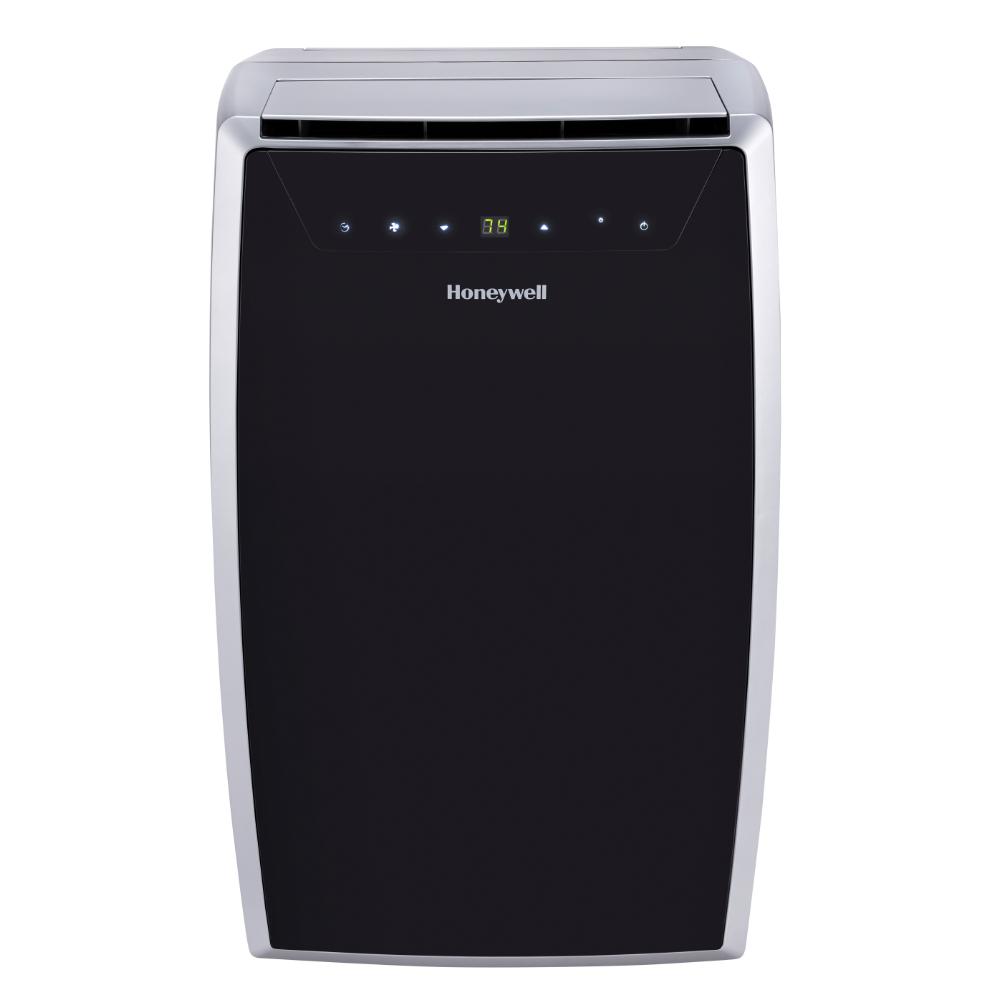
Primary references are Honeywell Air Comfort's exact MN4HFS9 product page and its linked MN4-family owner manual, whose cover explicitly includes MN4HFS9. The archived original image is a front-facing black-and-light-colored Honeywell cabinet on white; its alt text ties it to the exact listing, but the model code is not legible and photo-versus-render status is uncertain.
Key details at a glance
| Documented modes | cool / heat / dehumidify / fan |
|---|---|
| Dual-hose exhaust arrangement | No |
| Manufacturer's lowest sound claim | 54 dBA (claim, not our measurement) |
| Cabinet width | 18.1 in |
| Cabinet height | 29.4 in |
| Cabinet depth | 15.2 in |
| Listed product weight | 70.5 lb |
| Listed limited warranty | 1 years |
| ASHRAE cooling rating (separate test method) | 14000 BTU/h |
| Supplemental heat documented | Yes |
Use the exact model’s instructions for operating limits, supplied equipment and version differences.
Sources for this assessment

Keep the model number in the decision.
Check the listed suffix, included vent kit, room conditions and service instructions before ordering.