
Your needs, this model
Does it fit your priorities?
Will you consider a discontinued model only for an existing unit or specific older offer?
The exact manufacturer page marks MN1CFS8 discontinued and sold out; it belongs only in an earlier-model search.
Explore this need in the finder →Does the conflicting exact-page capacity evidence meet a minimum SACC requirement?
No SACC value is selected: the same page says 5,000 in one section and 8,100 in its table. A strict SACC threshold cannot be cleared from this source.
Explore this need in the finder →Can the listed cabinet be handled under a 64-pound ceiling?
The exact listing gives 63.9 pounds, which is at or below a 64-pound maximum; casters do not remove the lift.
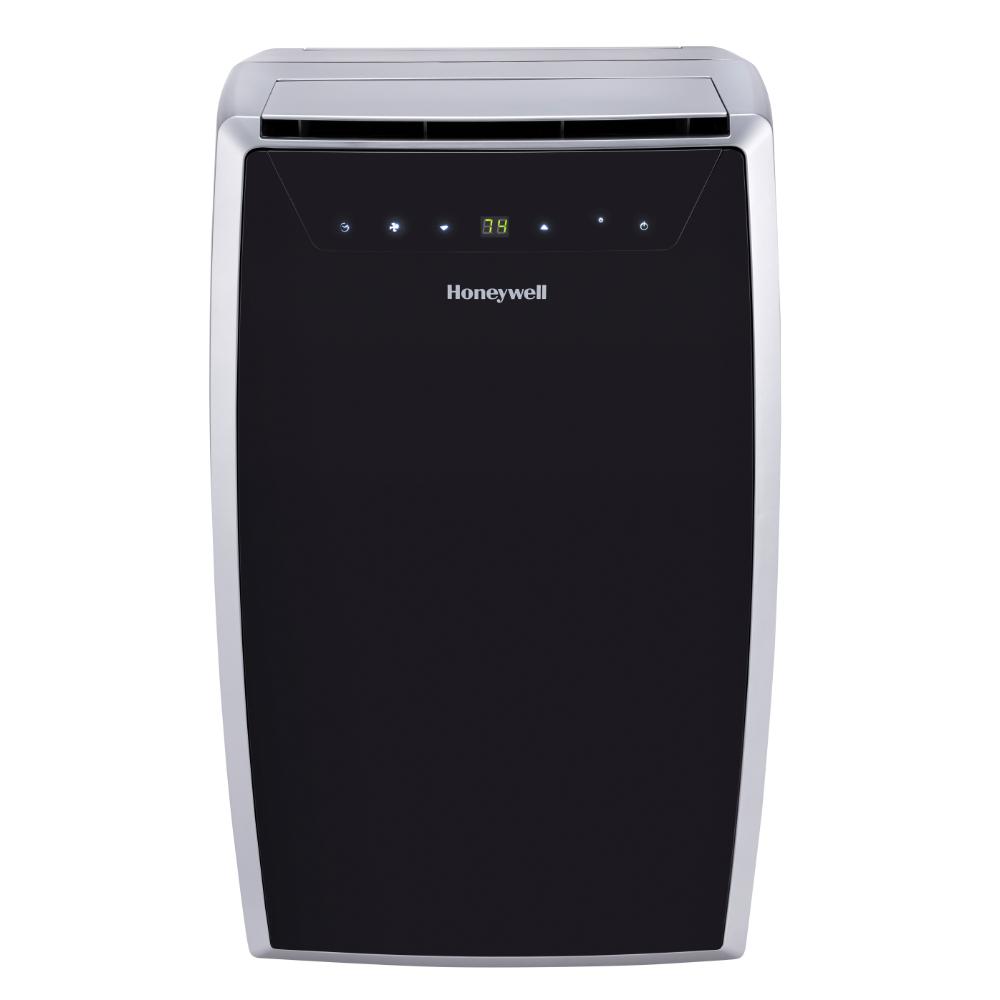
Explore this need in the finder →Honeywell’s U.S. product page identifies the MN1CFS8 as a black-and-silver, cooling-only portable AC with a single exhaust hose, washable filters, three fan speeds, remote control and a 24-hour timer. It also marks the model discontinued and sold out. Treat this assessment as a reference for an existing cabinet or a specific older offer, not evidence that a new unit is currently available. The CFS suffix is important: Honeywell’s related HFS models are separate heat-pump configurations.
Two earlier finish-only listings
The Honeywell support manual also names the distinct MN1CFSBB8 and MN1CFSWW8 CFS codes. Honeywell’s licensed Consumer Store pages identify the BB8 in black (UPC 848987004990) and the WW8 in white (UPC 848987004945); both pages list the same single-hose Cool, Dehumidifier and Fan setup, a 18.1-by-15.2-by-29.4-inch, 63.9-pound cabinet, and 11,000 ASHRAE / 8,100 SACC ratings. Those pages mark both variants discontinued, so treat them as older, code-specific listings rather than current stock. The rating conflict discussed above belongs to the separate MN1CFS8 Air Comfort page and is not solved by these finish variants. For an older unit, identify the model code on its rating label before relying on either capacity pair; do not transfer HFS heat-model features to any CFS code.
The capacity numbers do not reconcile
The exact product page first describes this model as 8,000 BTU/h ASHRAE and 5,000 BTU/h SACC. Its later performance table lists 11,000 ASHRAE and 8,100 SACC. Both are model-page statements, but they cannot all describe one rating. I preserve both pairs and leave the hard-match ASHRAE and SACC values unknown rather than choosing whichever number makes a room or capacity threshold look more favorable. The same page calls out a room area up to 500 square feet, but that estimate does not repair the rating conflict or account for sun, insulation, occupancy, ceiling height and heat-producing equipment. If a minimum DOE capacity is essential, this page alone does not establish that the MN1CFS8 meets it.
This is also why it should not be compared to another unit by the largest headline number. Look for the exact model’s DOE/SACC evidence and treat ASHRAE and SACC as different test measures. If you want the larger Honeywell model from this family, the MN4CFS0 page is more consistent on 14,000 ASHRAE / 10,000 SACC, although it is heavier, still discontinued, and not a heat model. For a current purchase, compare with currently listed reviewed models rather than using this old listing’s sold-out state as a price or stock signal.
Plan for a single hose and real clearance
The exact listing identifies one exhaust hose and no heat pump. The cover-named MN1 family manual lists one 5.91-inch hose that extends from 12 to 47 inches; it warns against extending or sharply bending the hose. The manual asks for at least 31.5 inches behind the cabinet and 20 inches at the top, front and sides, so the footprint is not simply the cabinet’s width and depth. A single-hose portable unit brings warm exhaust outdoors while drawing room air through its cooling system. If dual-hose operation is essential, this is not a fit.
The page says its window kit covers 36 to 52 inches, while the manual describes panel pieces around 19.7 inches each and an assembly of up to 47.2 inches. Those are not a reliably stated clear-opening interval; I leave the numerical window fit unknown. Measure the actual sash opening and confirm the kit pieces in the specific older offer. Do not trim or extend the exhaust hose based on an assumed span.
Weight, water and routine upkeep
Honeywell lists an 18.1-by-15.2-by-29.4-inch cabinet at 63.9 pounds. Built-in casters help roll across a smooth floor, but they do not make lifting it onto stairs or into a vehicle easy. The page lists 52 dBA; that is the company’s figure, not an independent noise test or a guarantee of bedside quiet.
During cooling, the manual describes automatic evaporation as the normal condensate route, while noting that high humidity may still require draining the internal tank. Continuous gravity draining is documented for Dehumidifier mode; its drain hose is not included. The manual says continuous drainage while active cooling is not recommended because it may reduce cooling efficiency. A full tank can stop operation until drained, so do not assume that “self-evaporating” means no water management in every climate. Before first use after transport, set the unit upright for an hour, follow the manual’s window setup, and use a properly grounded outlet without an extension cord. Clean both washable filters every two weeks and keep the intake and outlet clear.
Who should consider this exact model?
The MN1CFS8 is best treated as a model-identification and fit reference for someone who already owns it or has a well-documented older offer. Its useful confirmed characteristics are straightforward: one-hose cooling, fan and dehumidifier modes; a remote and timer; a relatively lighter listed cabinet than the MN4CFS0; and an exact-family manual with hose, clearance and care instructions. It is a poor choice when verified SACC capacity, app control, heat, a dual-hose layout, a precise uncut panel span or present availability is a must-have.
For a confirmed 10,000-SACC Honeywell alternative within the same discontinued CFS family, the MN4CFS0 has a consistent cooling figure on its exact page but weighs 74.9 pounds and has its own dehumidification and window-span uncertainties. The lighter MN1CFS8 should not be assigned an invented cooling tier just because the title or one page section suggests a smaller unit. Confirm the rating label on a specific older cabinet, inspect the hose and window kit, and consider current-reference models if buying new.
Key details at a glance
| Documented modes | cool / dehumidify / fan |
|---|---|
| Dual-hose exhaust arrangement | No |
| Manufacturer's lowest sound claim | 52 dBA (claim, not our measurement) |
| Cabinet width | 18.1 in |
| Cabinet height | 29.4 in |
| Cabinet depth | 15.2 in |
| Listed product weight | 63.9 lb |
| Listed limited warranty | 1 years |
| Supplemental heat documented | No |
Use the exact model’s instructions for operating limits, supplied equipment and version differences.
Sources for this assessment
- Honeywell Air Comfort exact MN1CFS8 U.S. product page
- Honeywell official support manual covering MN1CFS8 and named family variants
- Exact page-associated original product image
- Licensed Exact Model Product Page
- Exact Product Page Linked Original Image
- Licensed Exact Model Product Page
- Exact Product Page Linked Original Image


Keep the model number in the decision.
Check the listed suffix, included vent kit, room conditions and service instructions before ordering.