
Your needs, this model
Does it fit your priorities?
Does the 8,600-BTU/h SACC cooling rating meet your minimum, and is earlier-model eligibility acceptable?
The exact page gives 8,600 SACC and marks the model discontinued; it passes an 8,000-SACC threshold only when earlier models are included.
Explore this need in the finder →Must the appliance heat as well as cool?
Yes. The exact HESAWW9 page lists 8,600 BTU heating capacity and the model-named manual documents a heat mode; the cooling-only CESAWW9 is not interchangeable.
Explore this need in the finder →What minimum ambient temperature must heat operation reach?
The exact family manual states heat operates at 44–77°F ambient; a requirement down to 50°F is documented, but 40°F is not.
Explore this need in the finder →Can heating operate without a continuously connected drain hose, if you can empty the internal tank?
The manual says continuous drainage is not available in Heat; the tank must be emptied when full. It passes a no-hose heat requirement only if manual tank emptying is acceptable.
Explore this need in the finder →Is an exact clear-window span or cabinet limit essential?
No numeric clear opening, body dimensions or weight is published on the exact HESAWW9 page; a hard numeric fit requirement remains unknown and must reject.
Explore this need in the finder →The Honeywell HW2HESAWW9 is the heat-pump version of the compact HW2 portable-air-conditioner family. The exact U.S. listing is marked discontinued, so it is a reference for an existing appliance or a specific older offer—not a promise of current availability. The manufacturer identifies 12,000 BTU/h ASHRAE and 8,600 BTU/h SACC cooling, plus a separate 8,600-BTU heating-capacity claim. It also advertises a room estimate up to 550 square feet and 95 pints per day of dehumidification. These are manufacturer figures, not independent tests; the square-foot estimate should not override the room’s sun, insulation, ceiling height or internal heat load.
Heat is the meaningful difference—and has operating limits
The model-named manual gives a useful boundary that a short product headline cannot: heating is available when ambient temperature is between 44 and 77°F, with the set point adjustable from 61 to 77°F. The product page calls the heat output 8,600 BTU but does not identify a test basis, so that figure should not be treated as a winter design rating. This is supplemental heat for a room that remains within the documented operating range, not a substitute for a furnace or a promise that the unit can heat during colder weather. The exhaust hose still has to vent outdoors during heat mode.
The tradeoff is water handling. In heat mode the heat pump draws moisture from room air into the internal tank. The manual says the unit pauses when that tank is full and restarts after it is emptied; it does not permit continuous drainage in heating mode. Honeywell recommends using heat at 50% relative humidity or lower and warns that kettles, humidifiers and other moisture sources make the tank fill sooner. If you want to run heat while away, cannot reach the drain plug, or need a permanently routed hose, this model’s documented routine is a poor fit. The manual describes continuous drainage for Dry/dehumidifier mode using a separately supplied hose, but specifically rules that route out for heating.
Plan a single-hose window installation
The exact listing includes a window kit, exhaust hose and remote. The linked manual documents one hose with a 5.9-inch diameter and a 12-to-47-inch extension range. It says not to lengthen it or bend it sharply; the hose is part of the intended operating setup, not a generic vent that can be extended to reach a distant window. The kit has adjustable panel sections listed at 19.7, 38.2 and 47.2 inches, with instructions to trim for some shorter openings. Those are component lengths, not a universal clear-opening range. Unlike the cooling-only sibling’s detailed product table, this exact heat-model page does not publish cabinet dimensions, product weight, or clear installed window endpoints. If a narrow alcove, doorway or exact slider measurement is essential, those numbers remain unknown here; do not copy them from the sibling because the shared cabinet appearance is not proof of identical specs.
How it compares with cooling-only HW2
The cooling rating is the same 8,600 BTU/h SACC tier as the HW2CESAWW9. The reason to choose this HESAWW9 is the added heat mode, not a larger cooling system. The exact page describes a remote, an illuminated/mirage display, auto-swing and a timer; the model manual explains cool, dry, fan and heat routines. Its page also gives a 50-dBA quiet-operation claim, which is not a measured sound result under a standardized room setup. The manufacturer’s cooling page for the CESAWW9 contains a detailed cabinet table, but the HESAWW9 page does not; weight, overall dimensions, a CEER value and energy-guide consumption are therefore not used as positive fit claims for this exact model.
For someone who only needs summer cooling, the CESAWW9’s exact published dimensions, weight, 36-to-52-inch product-page window range and three listed fan speeds make it easier to evaluate from the available evidence. The HESAWW9 earns consideration only if occasional heat is valuable and its unknown physical fit can be checked from the actual unit or its rating material. Both are single-hose designs, and both are discontinued; neither should be selected by transferring specifications from the other. The HESAWW9 will not meet a 10,000-SACC cooling minimum, and its heat cannot be recommended for an essential below-44°F operating requirement. An unknown cabinet weight or CEER cannot satisfy a strict maximum or minimum in a buying questionnaire.
Who should keep looking?
Consider this exact model only if a particular offer or existing appliance is available, the room fits the documented 8,600-SACC cooling tier, the window and hose can be installed as instructed, and you accept manual water-tank checks during heat. It is a poor choice when the home needs dependable low-temperature heating, unattended heat, a confirmed pump or continuous heat-mode drain, a dual-hose layout, or dimension- and weight-bounded placement. Before buying an old unit, check its exact suffix, included kit, tank and drain components, return policy and written warranty terms. The listing’s discontinued badge and one manufacturer page are not proof of a currently supported new product. If you need a reliable heater, a higher capacity tier or an exact fit that this page does not document, compare current models with model-specific manuals rather than treating the HESAWW9 and CESAWW9 as interchangeable.
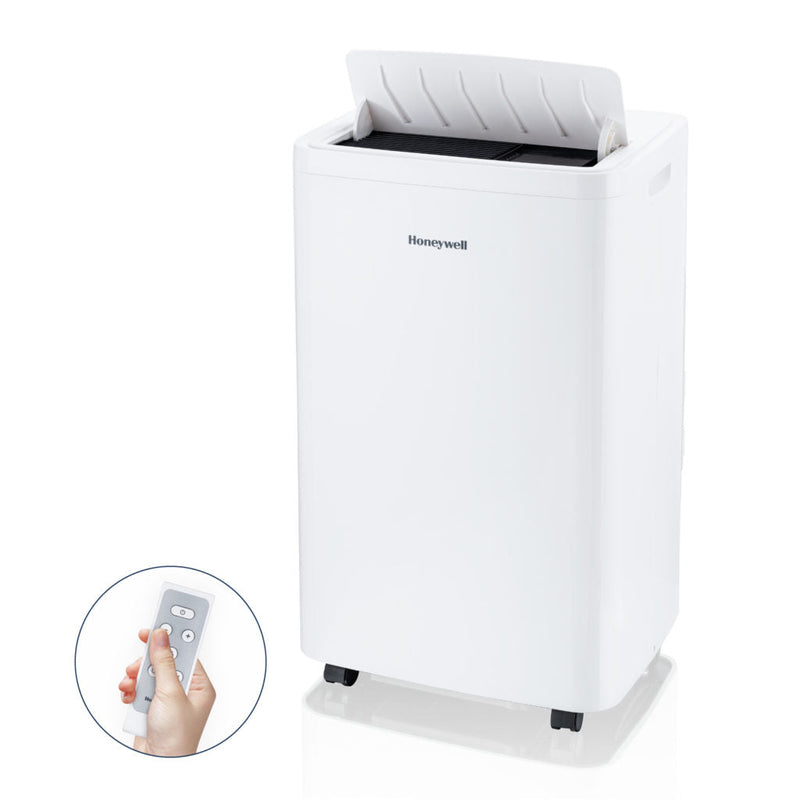
Primary references: Honeywell’s exact HW2HESAWW9 product listing and its linked HW2CESAWW9/HW2HESAWW9 owner manual. The associated image is a white-cabinet manufacturer packshot; photograph versus render is uncertain.
Key details at a glance
| DOE seasonal-adjusted cooling capacity | 8600 BTU/h |
|---|---|
| Documented modes | cool / dry / fan / heat |
| Dual-hose exhaust arrangement | No |
| Manufacturer's lowest sound claim | 50 dBA (claim, not our measurement) |
| Built-in condensate pump | No |
| Minimum whole-degree ambient for heat-pump operation | 44 °F (manual) |
| ASHRAE cooling rating (separate test method) | 12000 BTU/h |
| Supplemental heat documented | Yes |
Use the exact model’s instructions for operating limits, supplied equipment and version differences.
Sources for this assessment
- Honeywell Air Comfort U.S. portable-air-conditioner collection capture
- Exact Honeywell Air Comfort U.S. HW2HESAWW9 product page
- Exact HW2CESAWW9 / HW2HESAWW9 model-named owner manual
- Exact page-linked HW2HESAWW9 product image
- CPSC full recalls listing search: exact HW2 model code
- CPSC product-safety warnings listing search: exact HW2 model code

Keep the model number in the decision.
Check the listed suffix, included vent kit, room conditions and service instructions before ordering.