
Your needs, this model
Does it fit your priorities?
Is a 12,000-BTU DOE portable-AC class essential for this room?
The exact Hisense U.S. page identifies a 12,000-BTU DOE model. It calls the product large-room but the accessible U.S. page does not give a numeric area estimate; size the room from its heat load rather than treating a title as coverage proof.
Explore this need in the finder →Do you require heat, and can you verify the exact heat-mode drainage instructions before installation?
Hisense identifies a heat-pump model with Heat mode. Its accessible U.S. page does not establish heat output, minimum outdoor temperature, or whether a drain hose is required. If heating without a hose is essential, this model is not confirmed for that condition.
Explore this need in the finder →Do the two-duct, inverter and connected-control features suit the installation you want?
The U.S. page describes built-in twin hoses, inverter technology, built-in Wi-Fi and an included remote. Exact panel endpoints, hose length and app protocol remain unverified; a one-hose-only requirement conflicts with the described twin-duct layout.
Explore this need in the finder →The Hisense AP1225UW1WD is a 12,000-BTU DOE portable air conditioner with a heat pump, two exhaust paths, an inverter compressor and built-in Wi-Fi. That puts it in a larger cooling tier than the 8,000-BTU HAP0824TWD and pairs cooling with heat. It is a candidate for someone who wants that combination, not an automatic answer for every large room: the accessible U.S. listing calls it “large room” but does not give a numeric area estimate, and an area label would not replace a room-load assessment anyway.
What the rating and feature list do—and do not—settle
Use the manufacturer’s 12,000-BTU DOE figure when comparing cooling capacity. Do not compare it as if it were an ASHRAE headline from another product. Hisense also lists 115 volts, a two-year warranty, four modes (Cool, Heat, Dry and Fan), a heat pump, built-in twin hoses, inverter technology, Wi-Fi and an included remote. Those are useful differentiators over a cooling-only unit. But the public text I could verify does not provide this SKU’s heat output, outdoor heat-pump temperature range, CEER, annual energy estimate, cabinet dimensions or weight. If an efficiency label, a tight cabinet opening or a minimum heat output decides the purchase, get the exact model sheet or label before treating the model as a match.
Hisense describes self-evaporation, but that phrase is not a promise of unattended moisture handling in every mode. The exact U.S. installation manual and model sheet were not available in the inspected support-page document extraction. Consequently, I would not assume that heating is drain-free, that a gravity drain or pump is included, or that the unit’s two exhaust hoses also solve condensate routing.
The dual-hose layout is a real installation constraint
The manufacturer calls the hoses “built-in twin hoses,” which is materially different from the single-hose AP1222CW1W. A second air path may matter to a shopper deliberately choosing a dual-hose design, but the listing alone does not tell you the hose lengths, exact fittings, whether they are separable, or whether an extension is allowed. Nor does it document the included window-panel span in the available text. Measure the opening and confirm the exact instructions before planning furniture or buying a replacement panel. Do not assume a tower or packshot is evidence that it can fit a casement window or vent without an outdoor route.
Heat-pump operation adds another compatibility check. The product page establishes a Heat mode, but not the lowest supported outdoor temperature or the heat-mode drainage steps. If you expect to use it as the primary heat source in cold weather, verify both the ambient range and the required drain arrangement with the exact manual. A model with an explicit heat-pump range and documented required drain kit may be a more conservative purchase when those conditions are non-negotiable.
Connected controls, placement and everyday ownership
The page lists built-in Wi-Fi and a remote, but the precise app name, router requirement, voice-assistant compatibility, scheduling features and timer behavior are not established in the text available for this exact SKU. Treat “smart” as a useful lead, not as a guarantee that a particular home ecosystem or network will work. If phone control is optional, the remote is the more concrete listed backup; if an automation platform is mandatory, confirm the model number in its current compatibility directory.
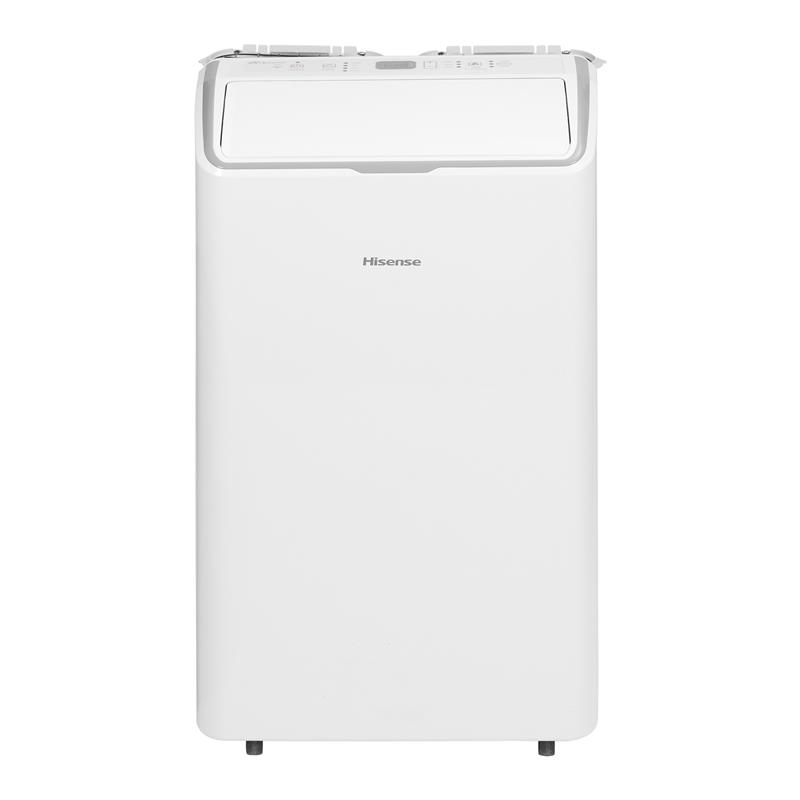
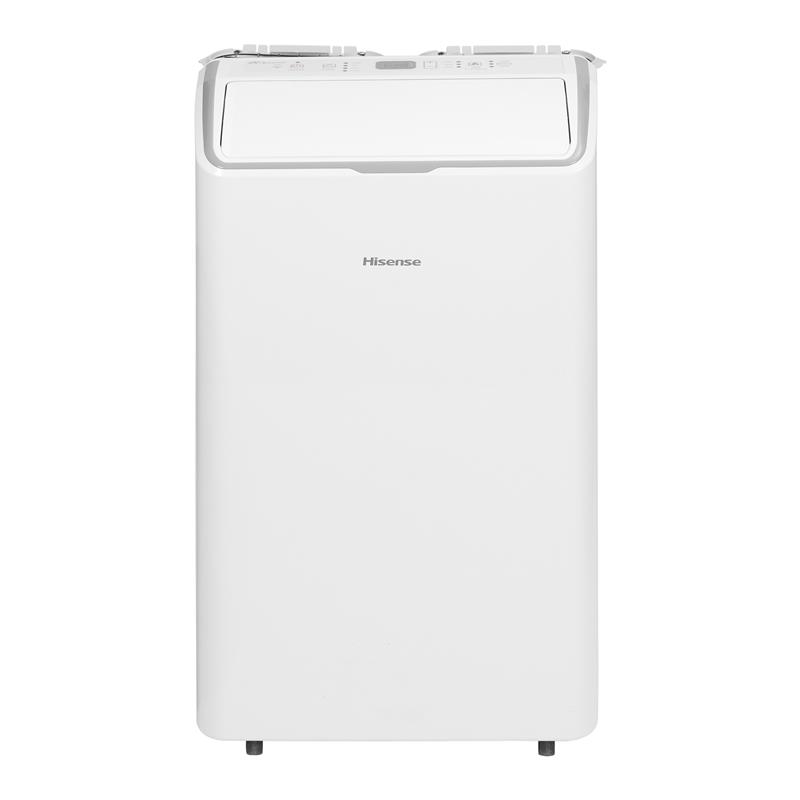
Likewise, verify the electrical label and required circuit at the intended outlet. The 115-volt listing is not by itself a substitute for an installation manual, plug type, current draw or electrical safety directions. Plan to keep the intake and discharge unobstructed and leave the service clearances the exact manual specifies; those distances are not stated in the accessible text. The manufacturer’s white-background image shows the front of a tall portable unit, but neither the image nor the model-page prose can establish the dimensions, how heavy it is to move or whether it will clear a door threshold.
Who should consider it—and what to compare
Keep the AP1225UW1WD on a shortlist if the 12,000-BTU DOE tier, dual exhaust paths, inverter claim, connected control and heat-pump modes all fit your needs, and you can obtain its exact installation information before committing. It is not a verified fit for a specific opening, a numeric room area, a no-drain heating need or a strict weight limit from the accessible record. Unknown is the honest answer for those conditions.
For a lower-capacity heat pump, compare the AP1022HW1GD: its exact materials document 10,000-BTU SACC and a heat-mode drain hose, so its thermal and drainage tradeoffs are clearer, though its heat ambient range remains unknown. If you want 12,000-BTU cooling without heat, the AP1222CW1W is a separate single-hose configuration with a documented 18–50-inch kit and manual; it is not the same machine or duct arrangement. The 8,000-BTU HAP0824TWD is another documented dual-hose choice, but cooling-only and with its own panel-fit caveat. Choose among them by confirmed capacity, heating and installation details—not by a shared brand name or an unverified room-size assumption.
Sources: Hisense’s AP1225UW1WD product page and exact support page, inspected as rendered/indexed text rather than saved raw HTML. The image is the original Hisense support-page-linked asset; photographer-versus-render status is unknown. Exact U.S. manual, sheet and EnergyGuide remain to be checked.
Key details at a glance
| DOE seasonal-adjusted cooling capacity | 12000 BTU/h |
|---|---|
| Documented modes | cool / heat / dry / fan |
| Dual-hose exhaust arrangement | Yes |
| Variable-speed inverter | Yes |
| App or connected control | Yes |
| Listed limited warranty | 2 years |
| Supplemental heat documented | Yes |
Use the exact model’s instructions for operating limits, supplied equipment and version differences.
Sources for this assessment
Keep the model number in the decision.
Check the listed suffix, included vent kit, room conditions and service instructions before ordering.