
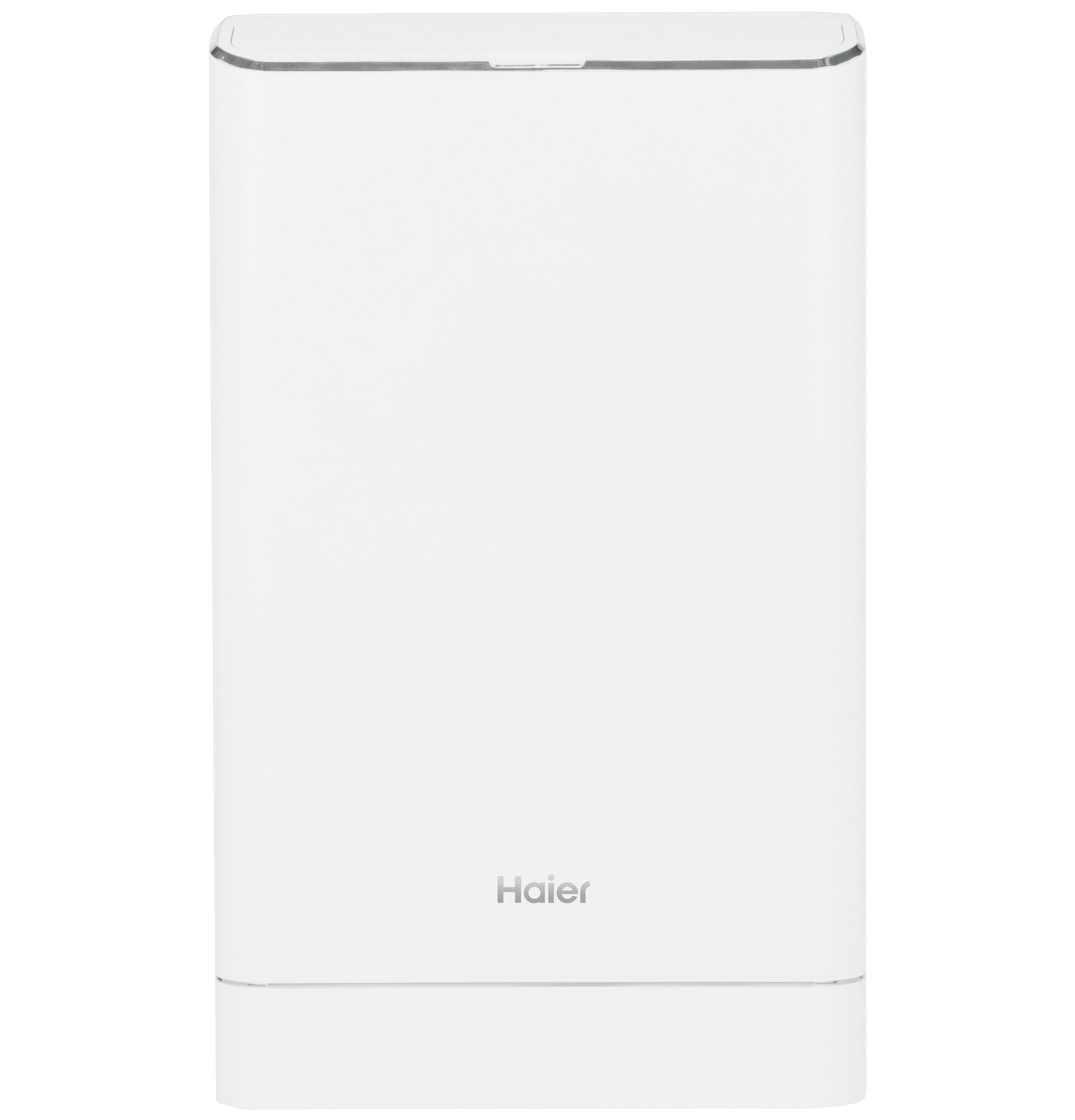
Your needs, this model
Does it fit your priorities?
Does 9,700 BTU/h SACC satisfy your cooling minimum?
The exact listing gives 9,700 SACC. It clears an 8,000-BTU/h threshold but does not reach a strict 10,000-SACC requirement; its room-area estimate is not a load guarantee.
Explore this need in the finder →Will the standard uncut window panel span your clear opening?
The exact listing/manual family documents a 20–46 inch panel range and the product page states a 4.8 inch minimum opening height. An opening wider than 46 inches is not confirmed without cutting or an unsupported extension.
Explore this need in the finder →Can you choose it without relying on connected-app control?
The exact product page includes a generic SmartHQ block, but the model-family manual limits Wi-Fi instructions to some models and the exact suffix is not confirmed. A user who does not require app control can still consider the local controls and remote; app-essential matching rejects.
Explore this need in the finder →Earlier Haier portable air conditioner · 9,700 BTU/h SACC
Haier QPCA14YZMW review: a higher-capacity legacy single-hose unit with real room-fit demands
The QPCA14YZMW is Haier’s largest cooling tier in this portable line: its exact U.S. product listing gives 13,500 BTU/h under the ASHRAE label and 9,700 BTU/h SACC, with a manufacturer room estimate up to 550 square feet. Those labels are not interchangeable. SACC is the more useful figure when your requirement is stated as a DOE-style portable-AC capacity threshold; the larger ASHRAE number and room-area estimate do not guarantee a particular room will cool comfortably. Sun exposure, ceiling height, outdoor temperature, insulation and open doorways all change the load.
This is an earlier model, not a current-reference pick. GE/Haier’s Owner Center lists manufacture from March 2020 through January 2023. That makes the QPCA14 most relevant when you are identifying a unit already in a home or considering a specific older offer. A model number on a retailer card is not proof of condition, seller stock or included installation pieces: confirm the full rating-plate suffix and inspect the package before relying on it. The model needs the finder’s earlier-product opt-in rather than appearing as a default current choice.
Capacity helps only if the room and opening suit it
At 9,700 SACC, the QPCA14 clears an 8,000-BTU/h minimum but falls short of a strict 10,000-SACC requirement. Compared with the reviewed QPCA12, its listed SACC rises from 8,200 to 9,700 and its area estimate from 450 to 550 square feet, but the QPCA14 cabinet also grows to 32 inches high, 18.5 inches wide and 15.35 inches deep. Listed net weight is 70.5 pounds. It is therefore not the small-room choice just because the cabinet is on casters: measure the exact location, path through the home and window before deciding.
The higher-capacity rating is a reason to consider it for a room that genuinely needs more cooling than the QPCA12 can supply, not a reason to oversize indiscriminately. Haier’s own up-to-550-square-foot claim is only a broad guide; it cannot account for a top-floor west-facing room, unusually high ceilings or several rooms open to one another. If a 9,700-SACC ceiling is too low, do not treat the “13,500 BTU” label as a way around a SACC requirement. If the room needs only a smaller tier, a less bulky unit may be easier to position and store.
Plan the installation before you commit
This is a single-hose exhaust design, not a dual-hose or hose-in-hose model. The included slider is listed for a 20–46-inch opening and the product page gives a 4.8-inch minimum opening height. Its hose is five feet long, and the matching family manual cautions against using a longer hose or extending the supplied one. Measure the clear track span and the height, then check whether the hose can reach the window without a tight bend. A wide cabinet is not automatically easy to install: the manual asks for 30 inches of free clearance around the unit in its location section, while a later installation passage says 20 inches. Use the more conservative 30-inch figure unless the manufacturer clarifies which instruction controls.
For operation, the exact listing describes Cool, Dry and Fan functions. It does not advertise heat for this SKU, so do not infer heating from a shared manual illustration that says heat appears on some models. The manual describes Dry as a moisture-removal mode with its own fixed fan behavior, not a second cooling-capacity rating. A remote and 24-hour timer are listed, and the touch controls have a variable LED display. That is a straightforward room-cooling package; it is not evidence of a particular seasonal energy result or independent sound test.
Humidity, power and upkeep are part of the tradeoff
Haier describes self-evaporation under most room conditions, but the manual also explains a water-full indicator and a lower manual drain. If that indicator appears, the instructions call for disconnecting power and placing a shallow pan of at least one quart under the drain before removing the cap and plug. The listed equipment does not establish a lift pump or a continuous gravity-drain route. Do not choose the QPCA14 for a room where unattended pumping is essential; be ready to empty the tank if needed.
The manufacturer’s detailed figures include 1,350 watts, 12.0 rated cooling amps at 115 volts, 7.7 EER and 55/59 dBA low/high sound claims. Treat those as product-page specifications, not my measurements. CEER and annual EnergyGuide use are not established in the material reviewed here, so a minimum-CEER filter should not count as met. The exact listing’s dehumidification figure is 100 pints per day, while the older 2021 catalog gives a different value in a row labeled pints per hour. Those differently labeled claims should remain attributed to their sources rather than converted or blended into a measured performance figure. The manual asks that the washable filter be cleaned at least every two weeks and says not to operate without it.
Choose the QPCA14 only when its 9,700-SACC tier, older-model status, 32-inch cabinet, single-hose exhaust and manual-drain possibility all fit your actual room. It is a poor fit for a strict 10,000-SACC minimum, a hard heat requirement, a required second exhaust path, guaranteed app control or a built-in pump. The QPCA12 is a smaller documented cooling tier if 8,200 SACC is sufficient; for an older offer, compare the full suffix, the actual package and service condition rather than assuming one model’s accessory set transfers to another.
Source basis: the exact QPCA14YZMW product page, the GE/Haier Owner Center record, and the GEA 49-5000467 Rev. 1 manual whose cover names QPCA14 among its covered models. The exact model’s connected-app status remains unconfirmed; no lab testing, prices, ownership or customer-review claims are used.
Key details at a glance
| DOE seasonal-adjusted cooling capacity | 9700 BTU/h |
|---|---|
| Manufacturer's stated room area | 550 sq ft (stated, not a guarantee) |
| Documented modes | cool / dry / fan |
| Dual-hose exhaust arrangement | No |
| Manufacturer's lowest sound claim | 59 dBA (claim, not our measurement) |
| Cabinet width | 18.5 in |
| Cabinet height | 32 in |
| Cabinet depth | 15.35 in |
| Listed product weight | 70.5 lb |
| Listed limited warranty | 1 years |
| Window-kit minimum width (where exact manual confirms) | 20 in |
| Window-kit maximum width (where exact manual confirms) | 46 in |
| ASHRAE cooling rating (separate test method) | 13500 BTU/h |
| Supplemental heat documented | No |
Use the exact model’s instructions for operating limits, supplied equipment and version differences.
Sources for this assessment
- Haier / GE Air & Water exact U.S. product page for QPCA14YZMW
- GE / Haier Owner Center support record for QPCA14YZMW
- GE Appliances manual 49-5000467 Rev.1 04-21, family cover names QPSA13/QPCA14/QPWA14
- Exact QPCA14YZMW page-associated original product image
- GE Appliances Air & Water 2021 catalog, QPCA14 row

Keep the model number in the decision.
Check the listed suffix, included vent kit, room conditions and service instructions before ordering.